As you know, President Trump has decided that all USA citizens must pay import taxes on any items bought from overseas. He has withdrawn the $800 pre-tax allowance on imports and has also cancelled the exemption for antiques.
The amount of import tax payable is dependent on the country of manufacture of the item, NOT where it was bought/imported from.
For example,
The tariff on UK made items is 10% of the total amount, including the shipping fee.
On items manufactured in mainland Europe, the tariff is 15%.
Some countries incur a much higher percentage.
President Trump has insisted that these fees be paid BEFORE the item is imported, or the parcel will be refused entry into the US.
This basically means that Bygone Blades has to collect the US import tax from you and submit it to the carrier, who in turn pay the US customs.
After you have made your purchase, you will receive a separate invoice for the new import tax specific to the item purchased. This will need to be paid before your purchase is shipped.
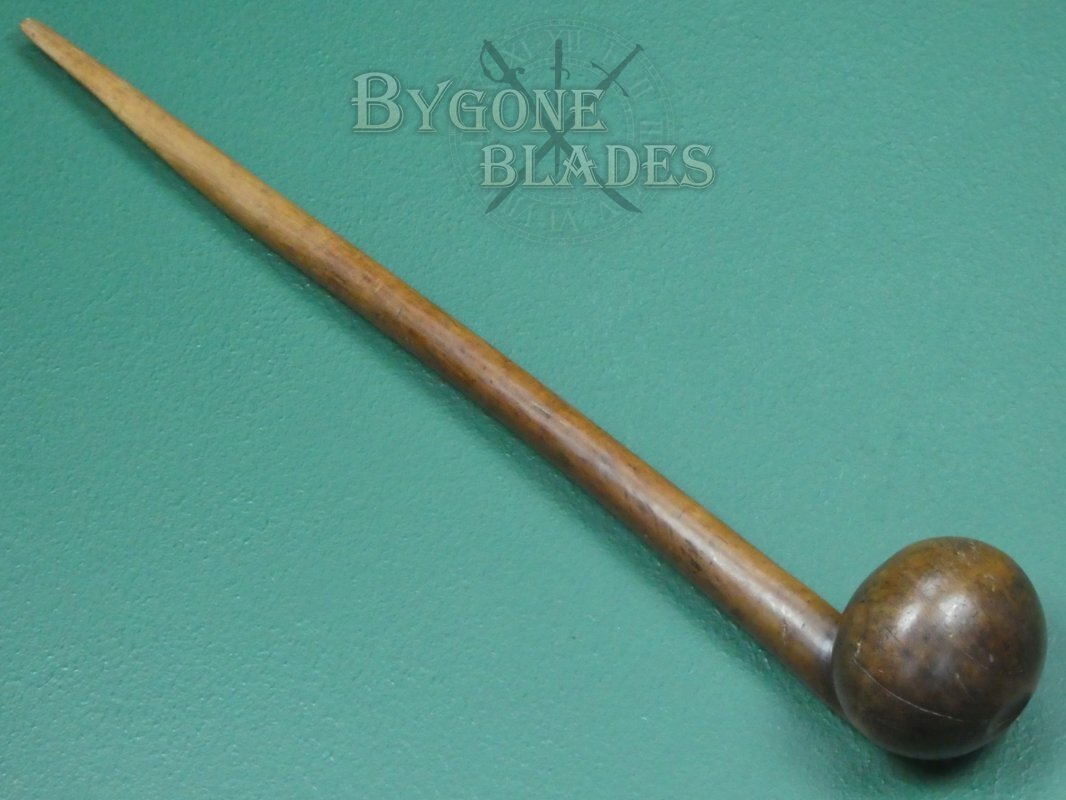
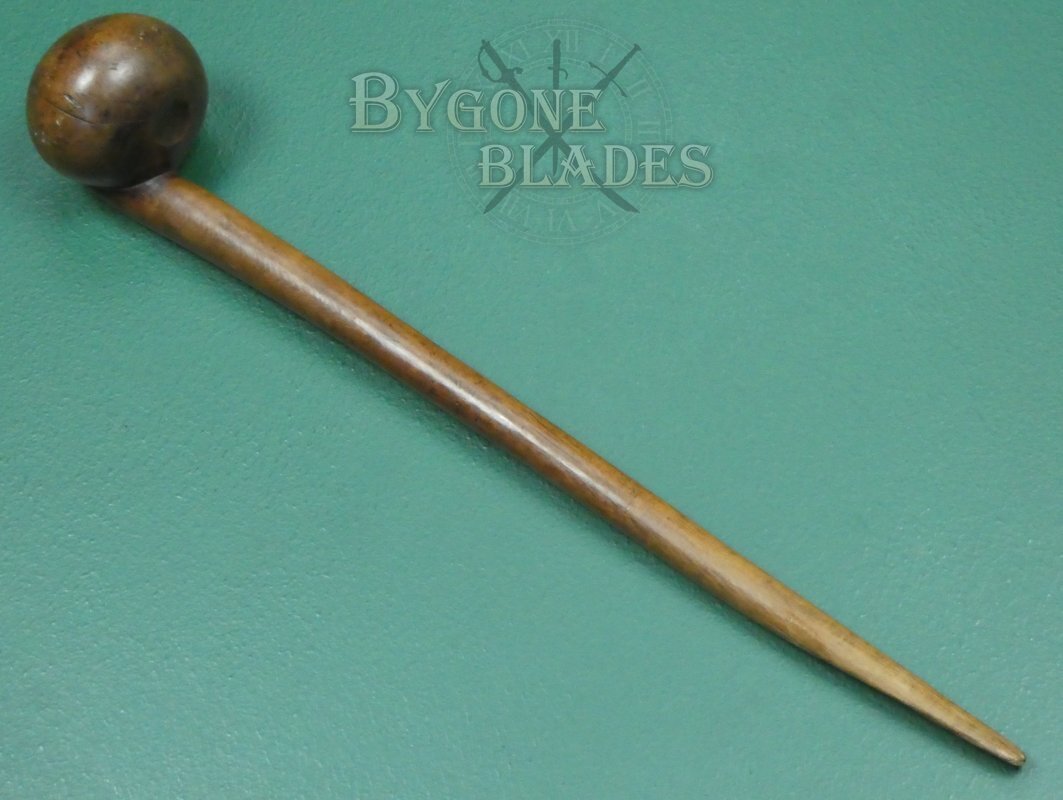
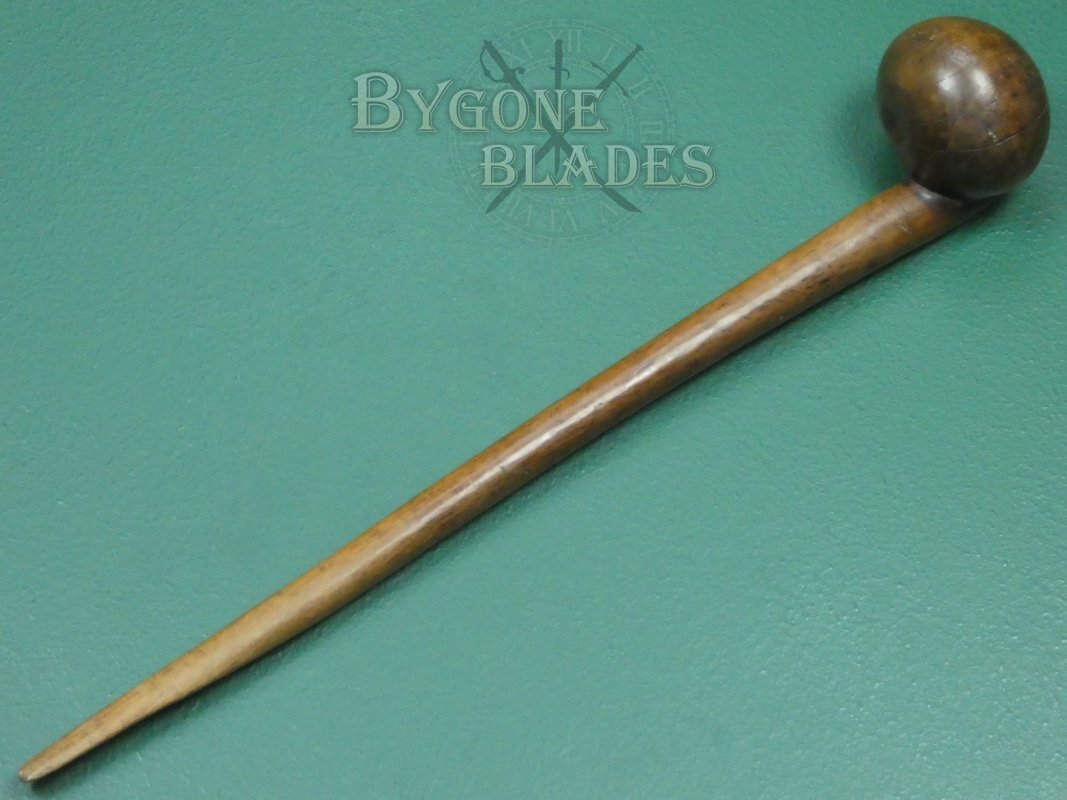
19th Century Zulu Iwisa. Snuff Taking Knobkerrie. #2511011
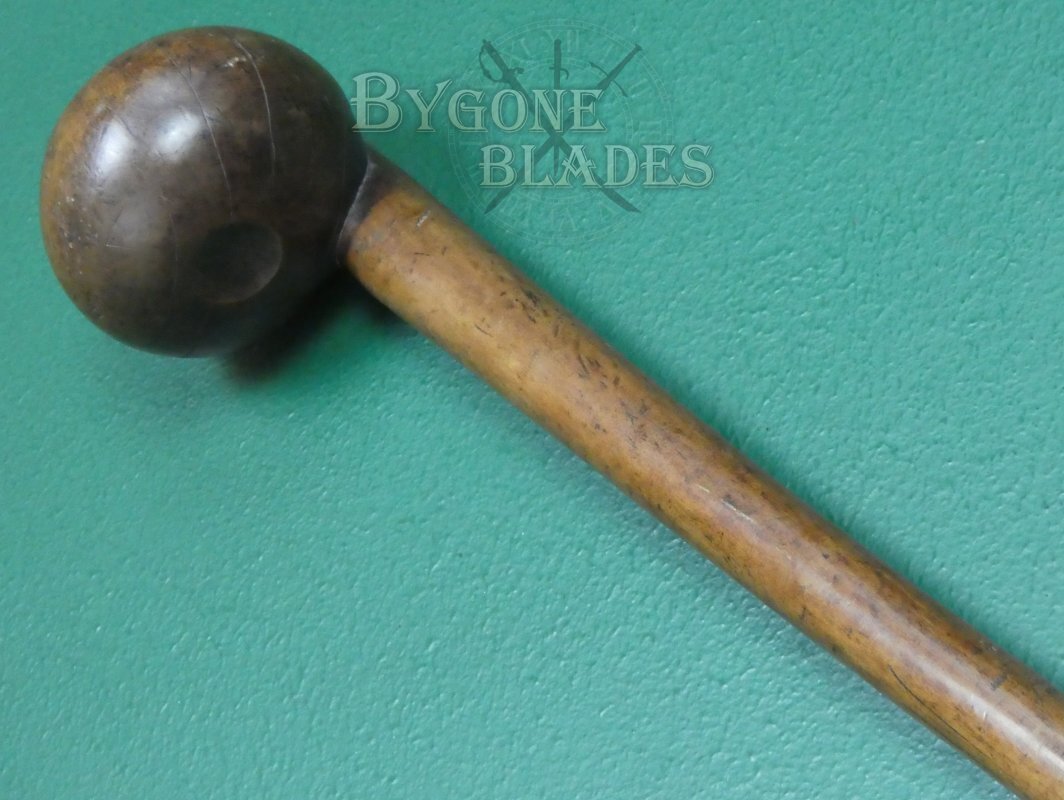
This beautiful Zulu iwisa dates to the late 19th Century and was probably a Zulu War battlefield trophy brought to the UK by a returning British soldier. Iwisa are often called knobkerrie, the name given to them by 19th Century Dutch settlers.
The iwisa was a very important weapon to the Zulu, second only to the iklwa. Traditionally a Zulu warrior carried an iklwa (stabbing spear), iwisa (club) and two or more isijula (throwing spears). Iwisa were traditionally used as a close quarters weapon but they also served as swagger sticks, ceremonial objects, and even as platforms from which to share the taking of snuff, itself an important and ritualistic part of Zulu society. Iwisa are a strong part of Zulu cultural identity.
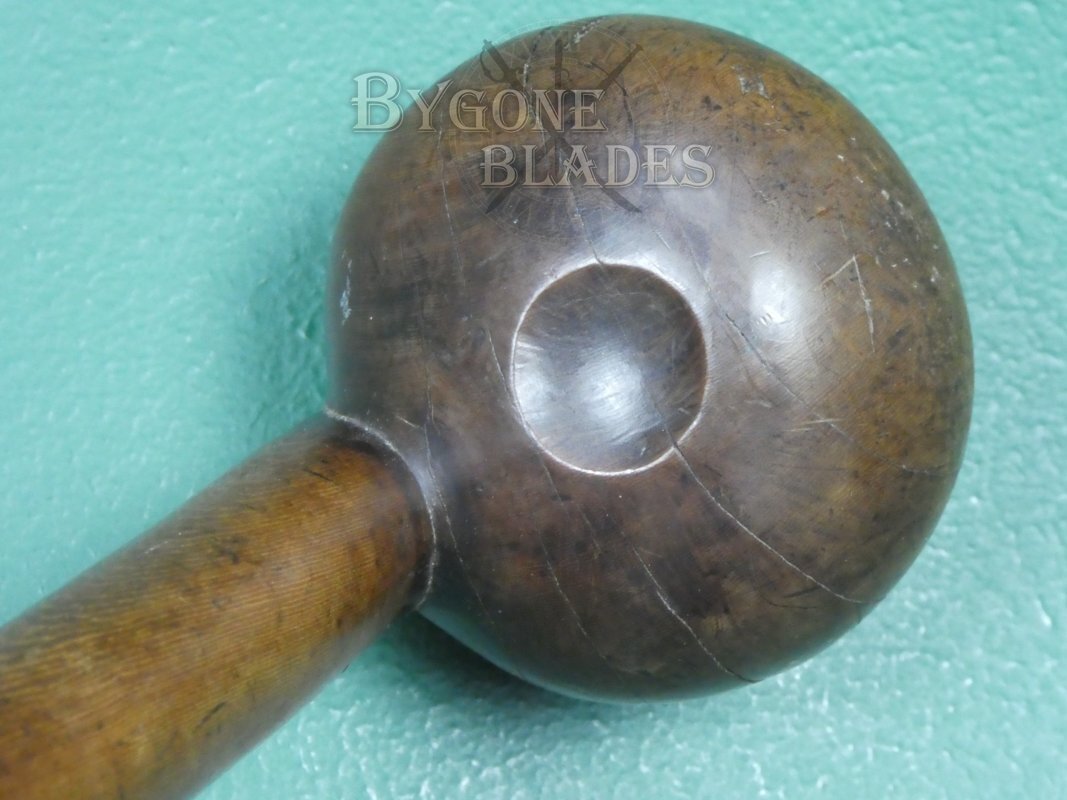
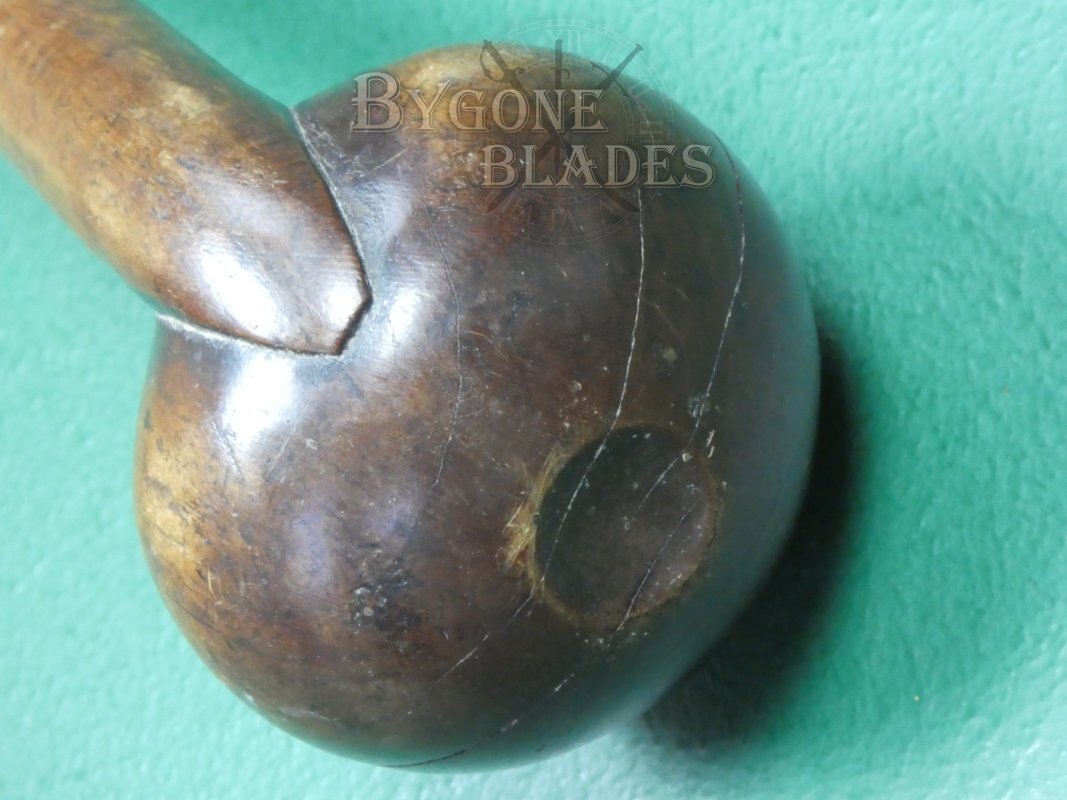
This impressive iwisa has carved circular bowls on the top and bottom of the head. These were for taking and offering snuff.
The large head measures 80mm across from side-to-side and 84mm front-to-back. The head has a depth of 66mm.
The 440mm haft has a great patina. The end of the haft has a period break; a small section having split off. The split is typical of damage caused by the head of the iwisa impacting with something solid, the shock travelling down the haft causing the split at the weakest point. The patina and smoothness of the end of the haft indicates that the iwisa remained in use for a considerable time after the damage occurred.
The iwisa has a total length of 506mm. A beautiful and tactile Anglo-Zulu War collectable that will enhance any collection.
£165.00
I am 18+ I have read and agree to the terms and conditions of sale and shipping
Select your shipping region:
We are unable to ship to P.O. Box addresses. Please provide an alternative delivery address at checkout.