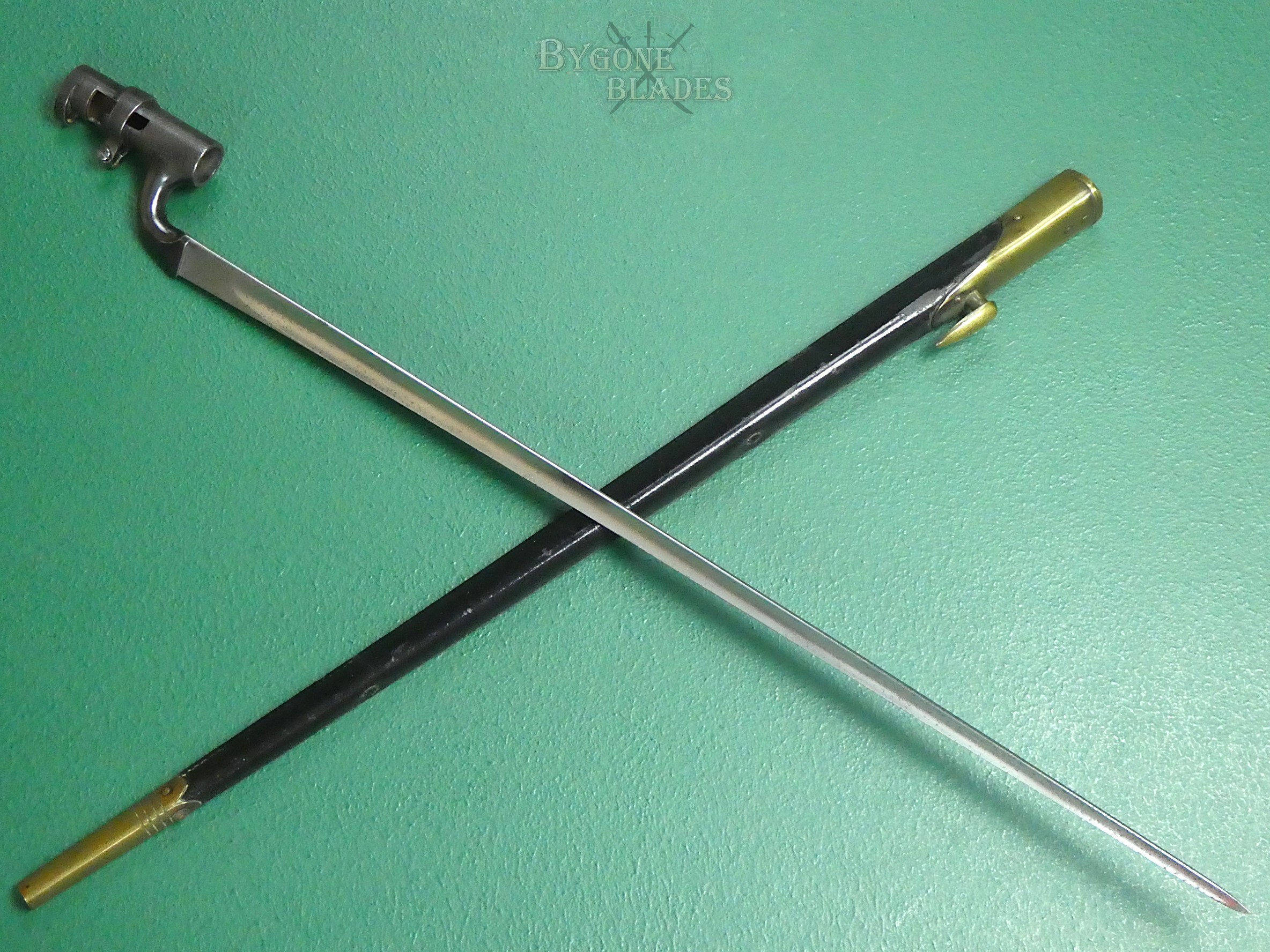
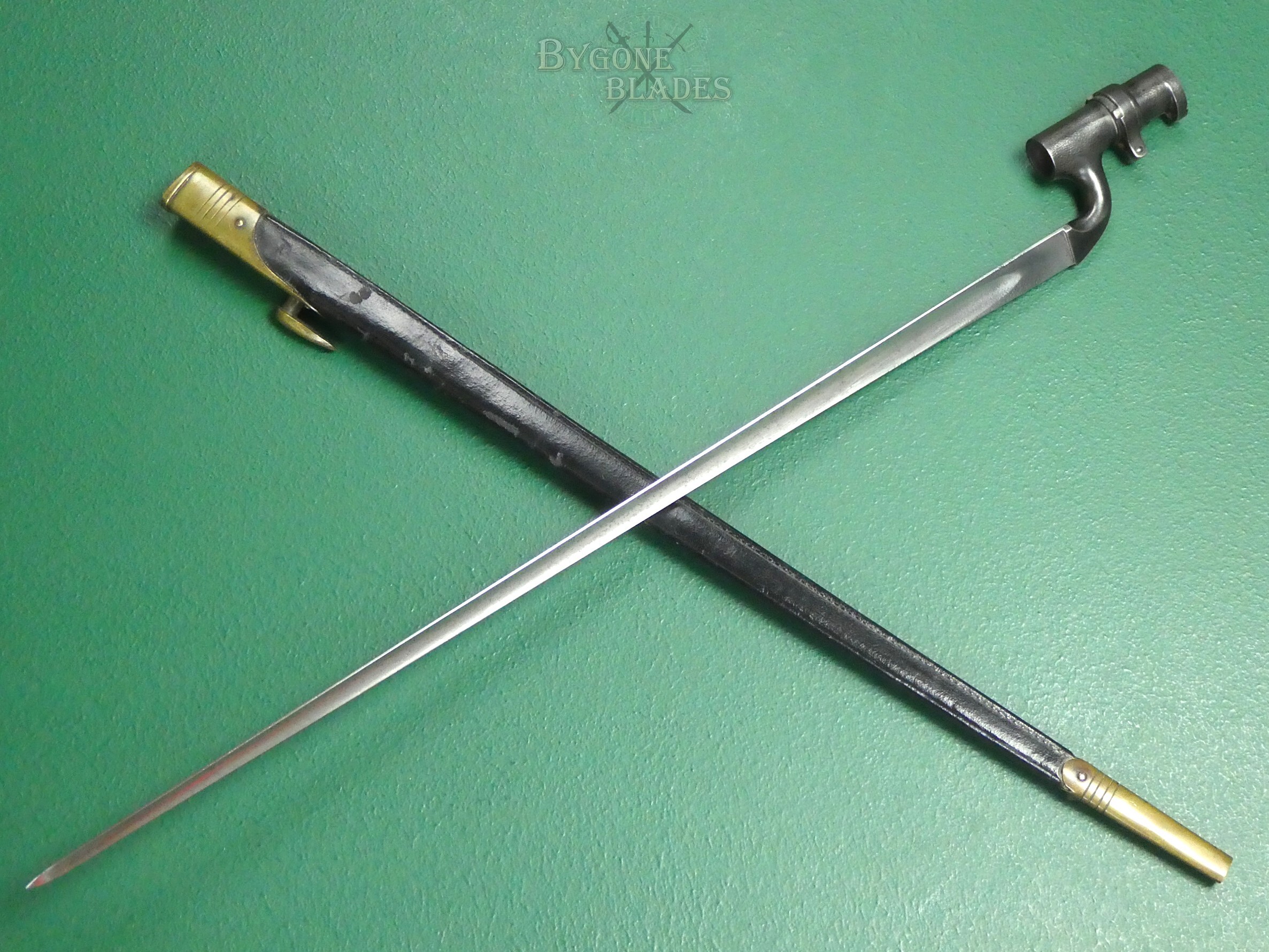
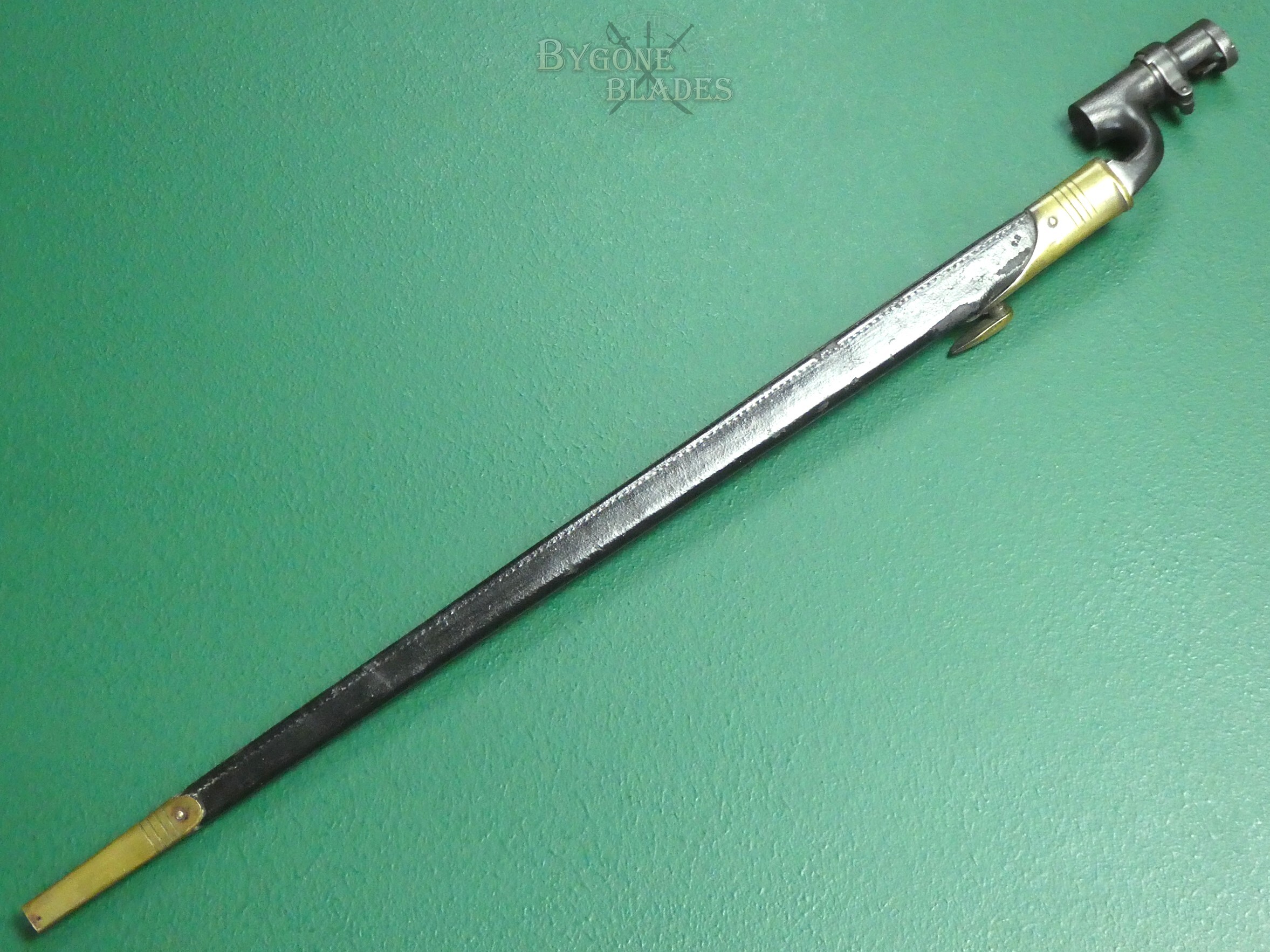
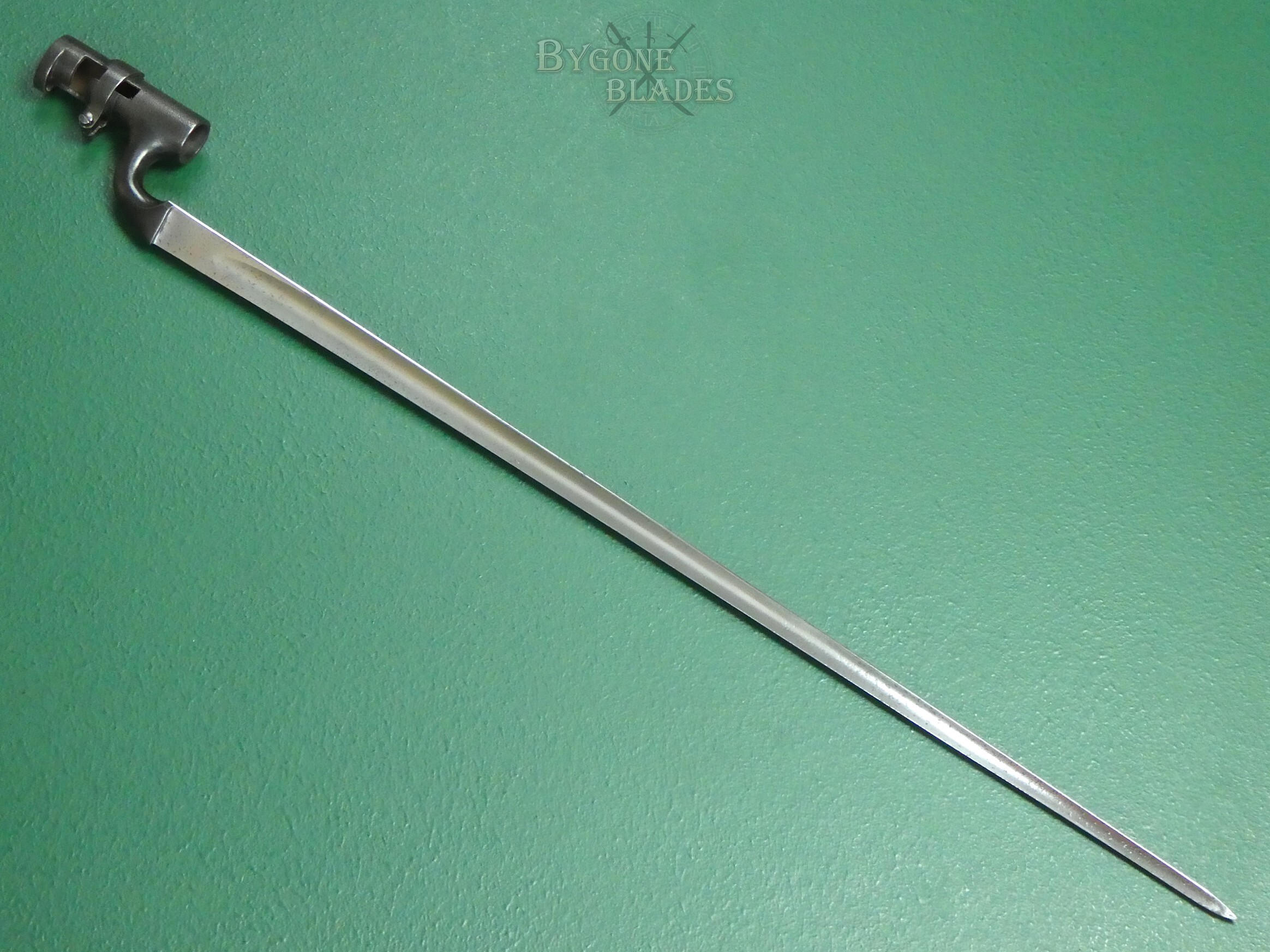
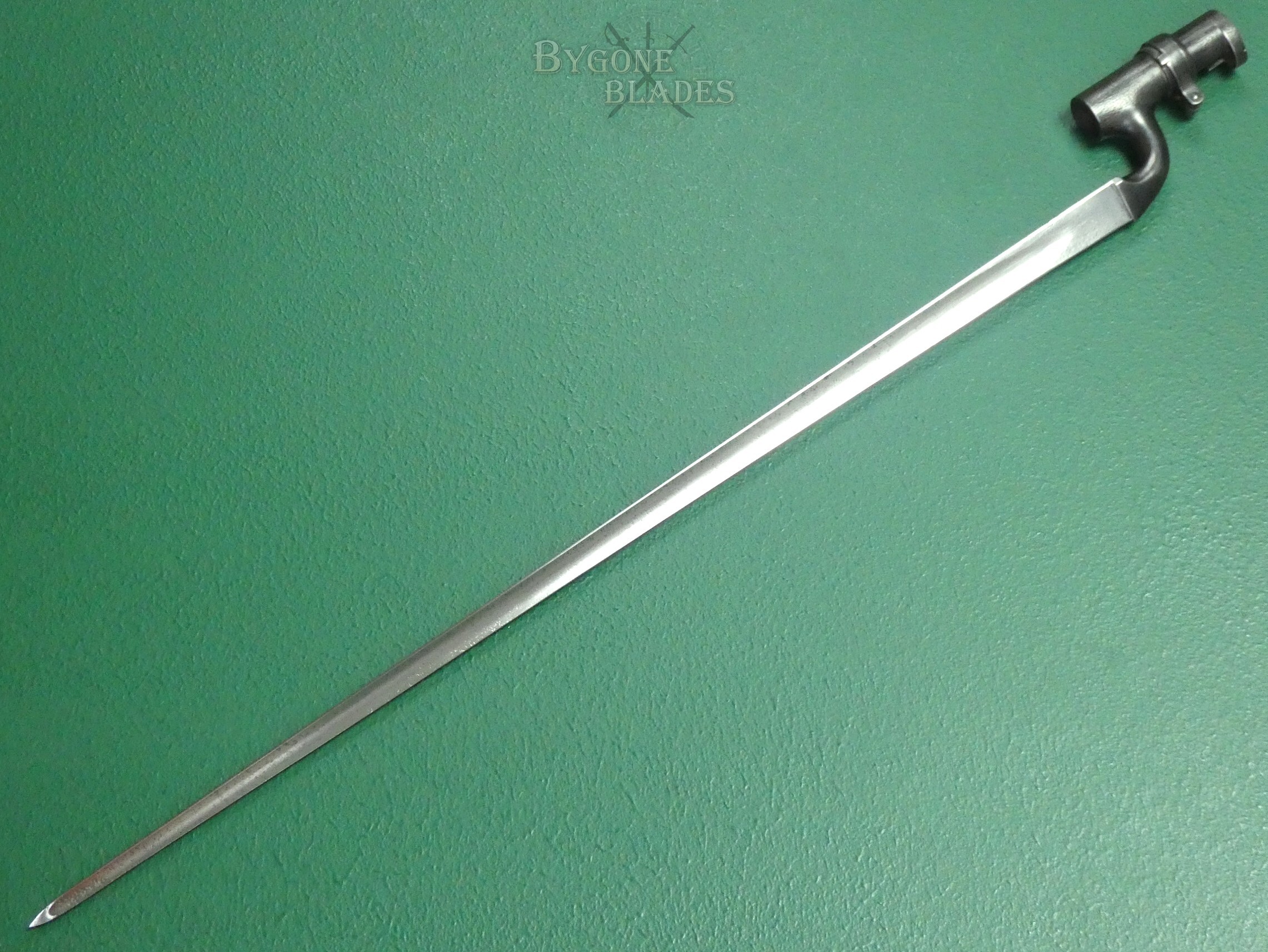
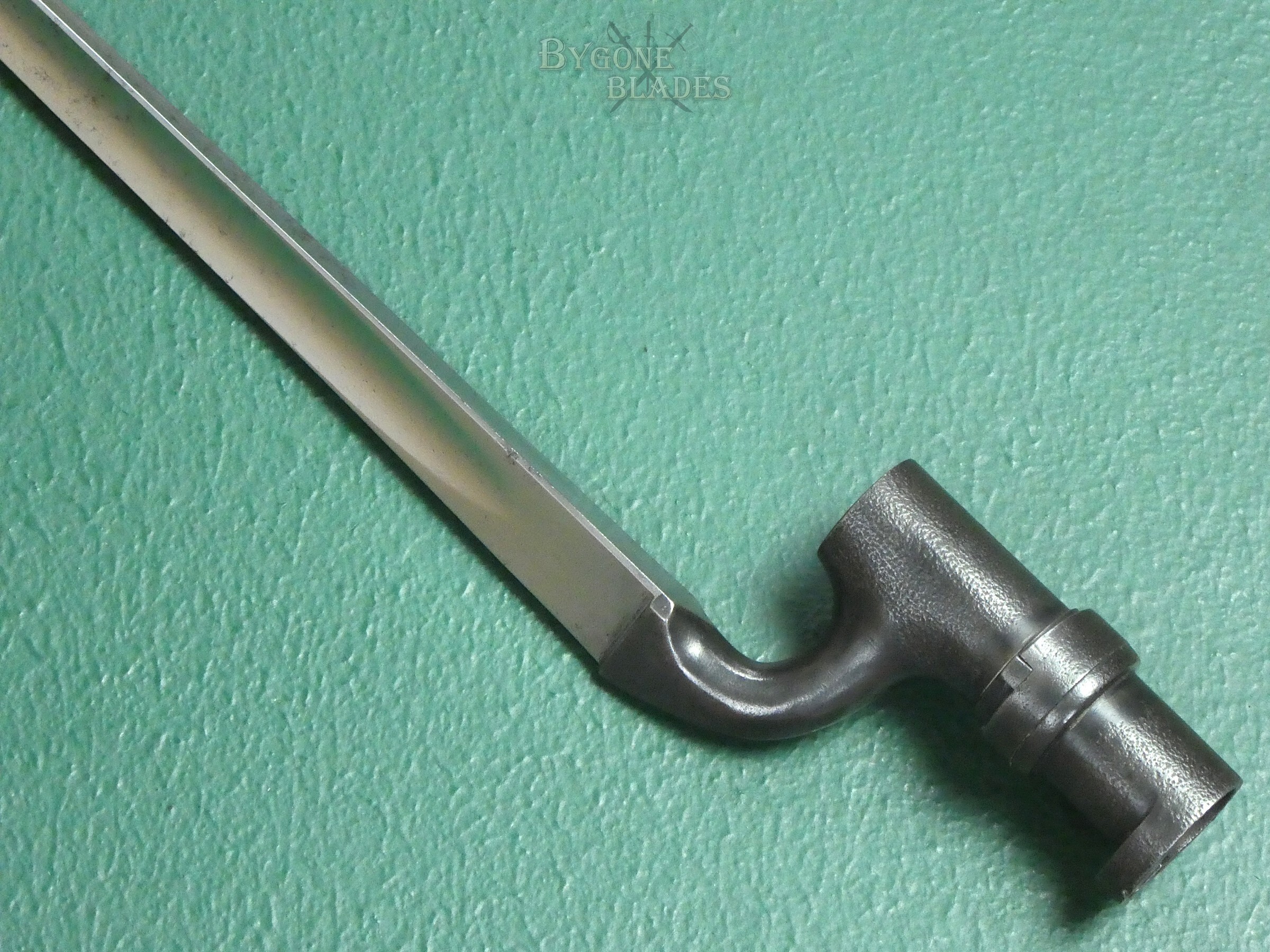
The Martini Henry Pattern 1876 socket bayonet, officially named the “Bayonet Common Long” was nicknamed the "Lunger" by the troops. The blade is triangular with blunt edges and was purely a stabbing weapon. The P1876 is the iconic bayonet of the Anglo-Zulu War of 1879.
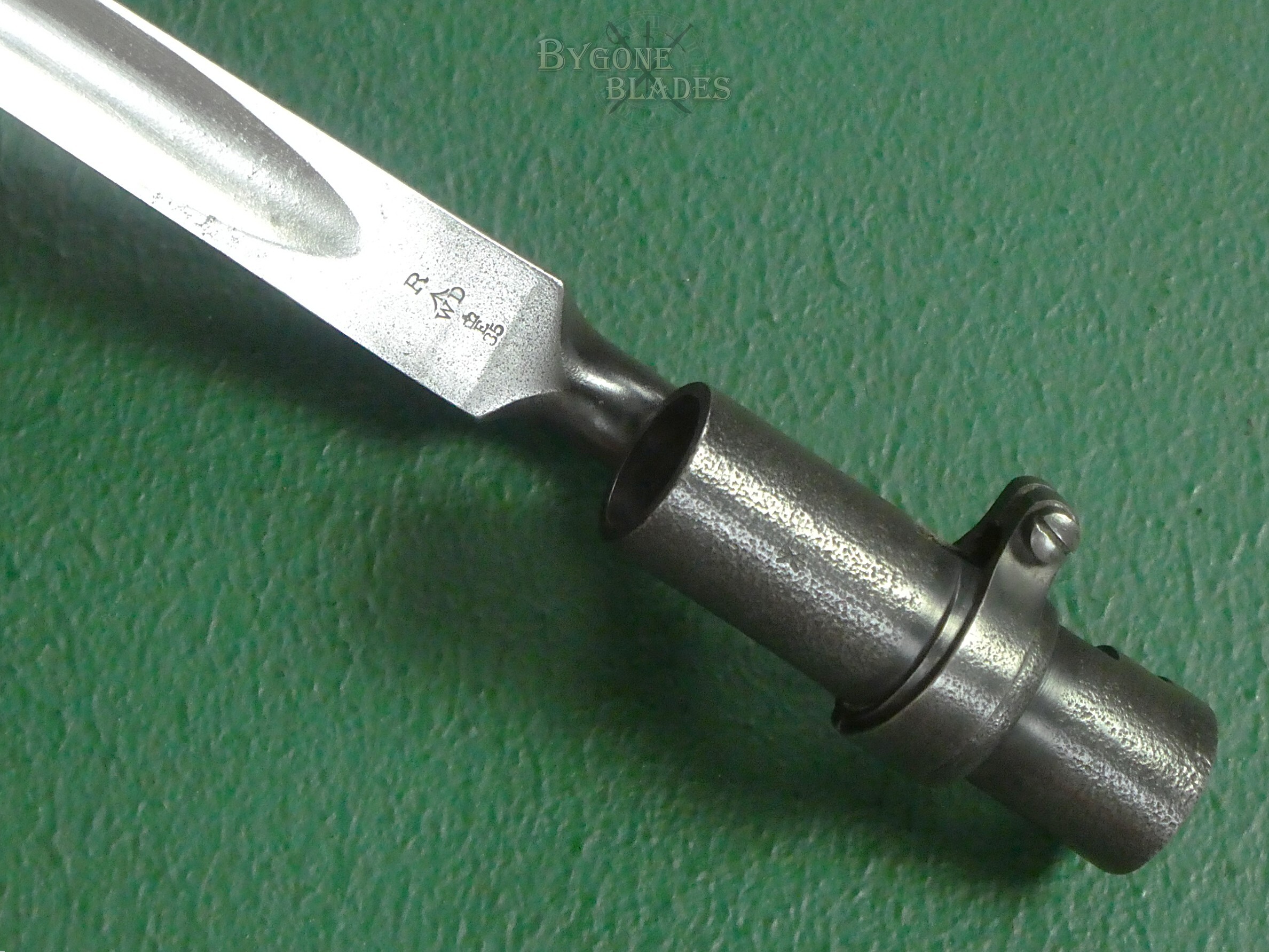
Prior to 1882, these bayonets were only marked with the War Department ownership mark and an Enfield inspection mark. The date of manufacture was added from July 21st 1882. The majority of 1876 pattern bayonets were manufactured by the Royal Small Arms factory Enfield.
The 546mm tri-form blade is in very good condition with small spots of tarnish and stabilised shallow pitting. The base of the blade is stamped with the War Department “WD” stamp, Broad Arrow and an Enfield inspection stamp. A capital letter R stamp indicates that the bayonet was refurbished. The absence of a date stamp on the blade indicates that the bayonet was produced prior to July 1882, making this bayonet one of scarcer, pre-dated examples that may have been in service during the Anglo-Boer War.
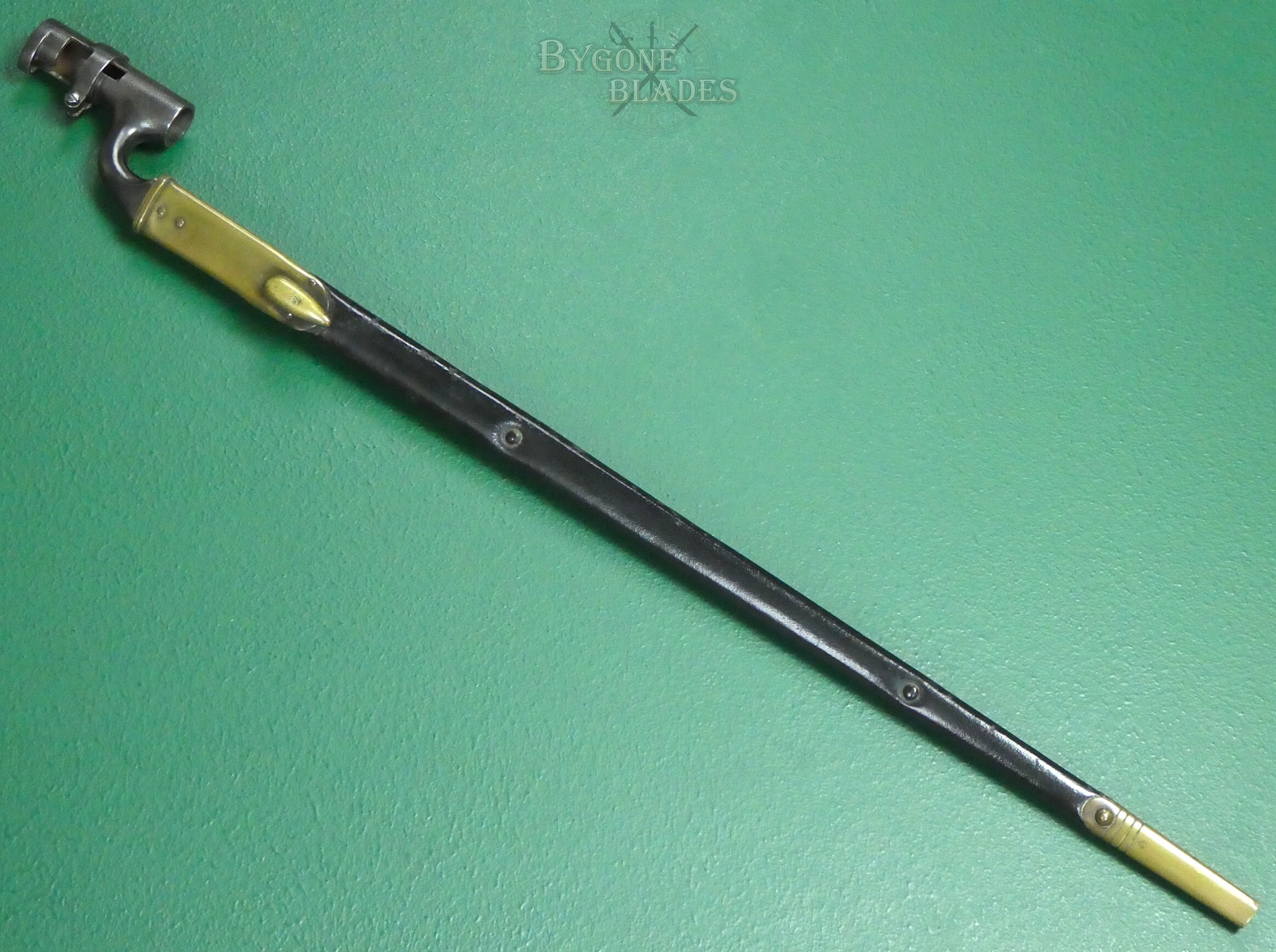
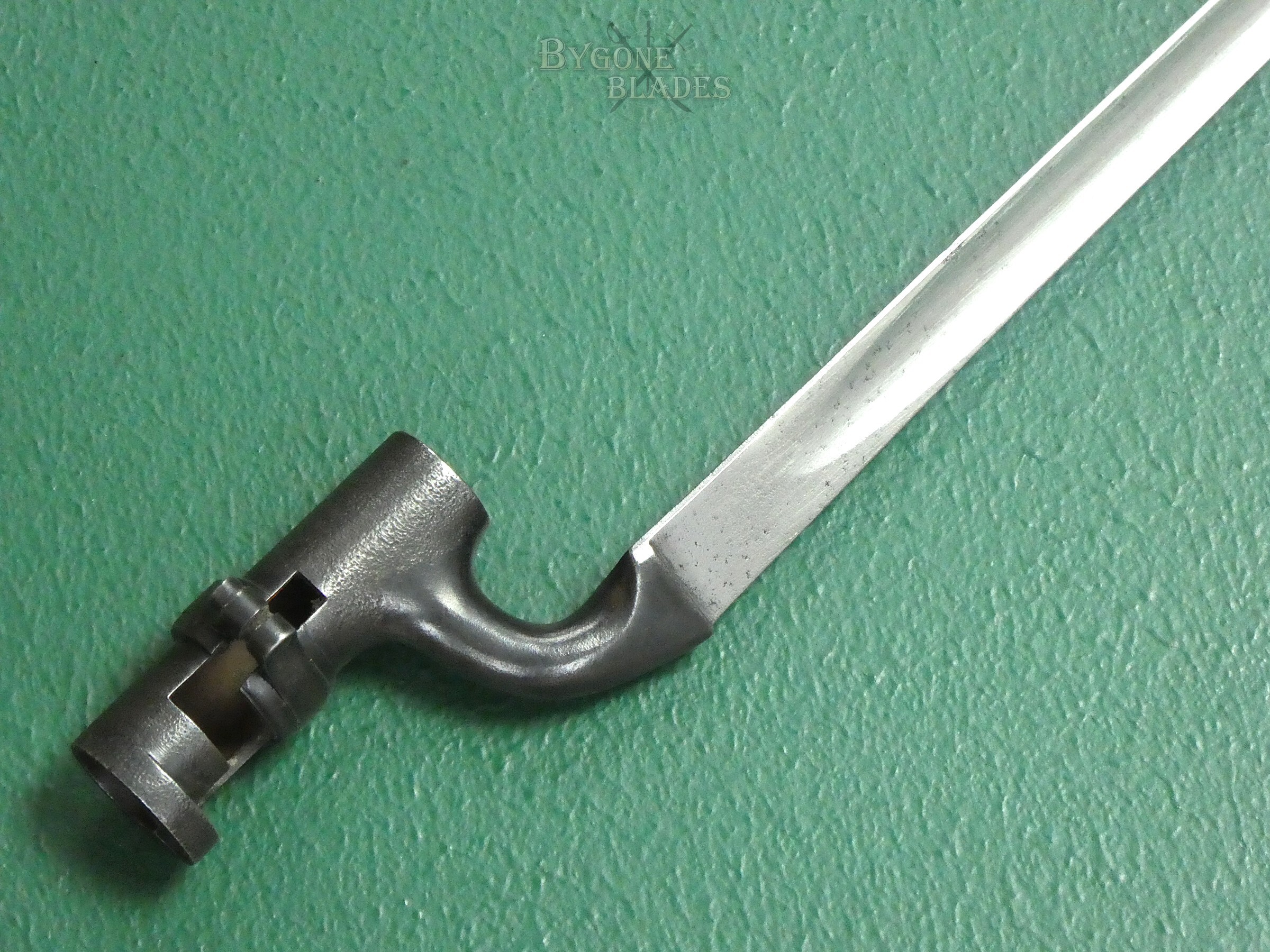
The socket is in good condition with minor shallow pitting. The socket is stamped on top with the inverted arrow “sold out of service” mark. The mortise ring on the socket works perfectly.
The second pattern, brass mounted black leather scabbard is in very good condition. The presence of two brass rivets on the scabbard date it to post July 1877. The brass locket with integral frog stud is marked with an Enfield inspection stamp. The WD and arrow on the teardrop frog stud is over-stamped with the inverted “sold out of service” arrows. The brass chape is also marked with a WD and arrow. The leather is in good condition and strong.
This is a good example of the iconic Anglo-Zulu War Martini Henry bayonet, made between July 1877 and July 1882.