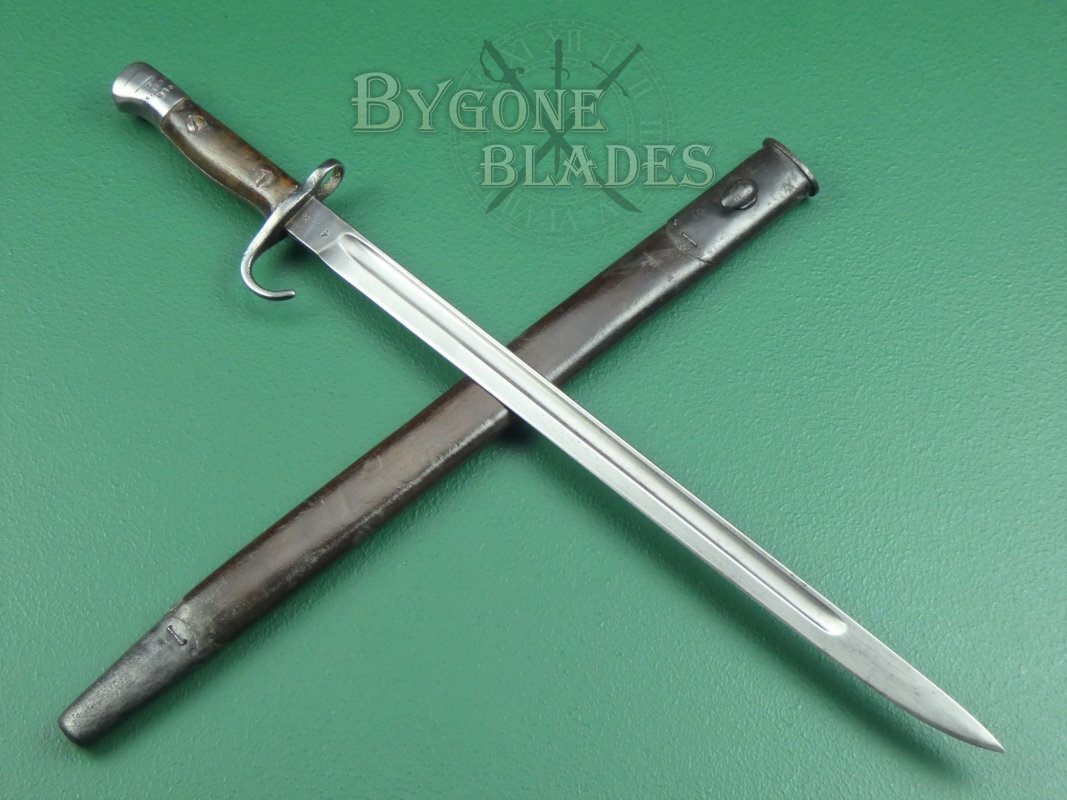
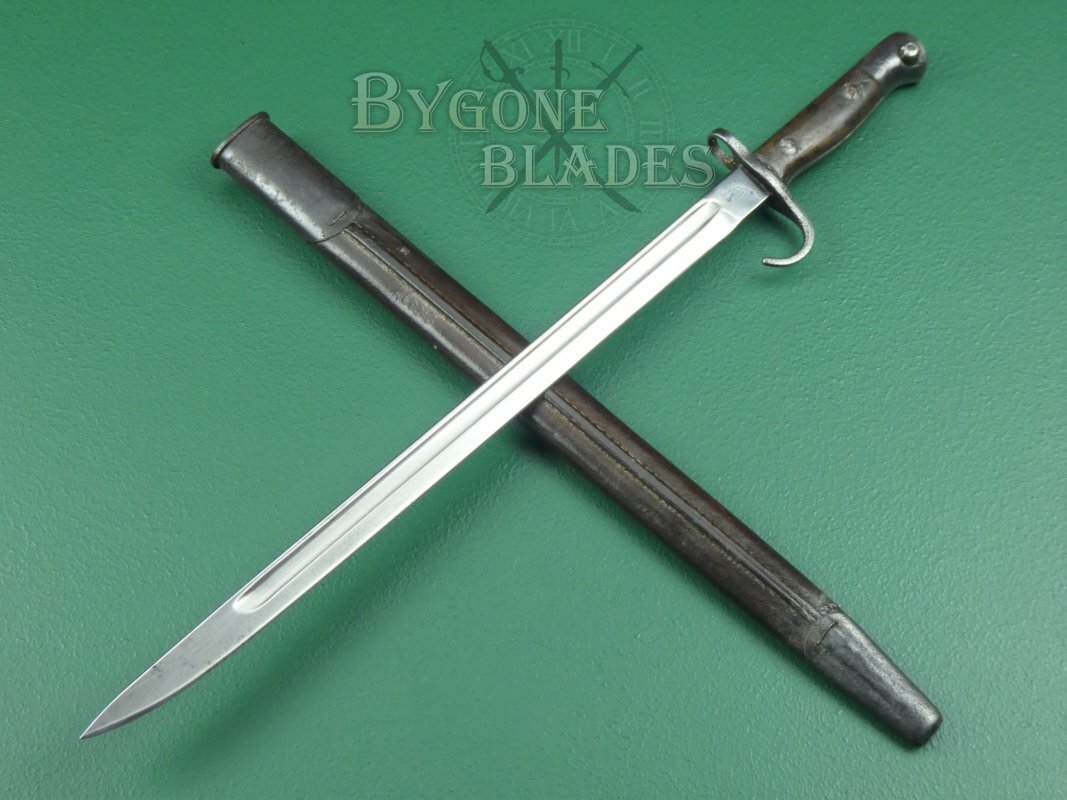
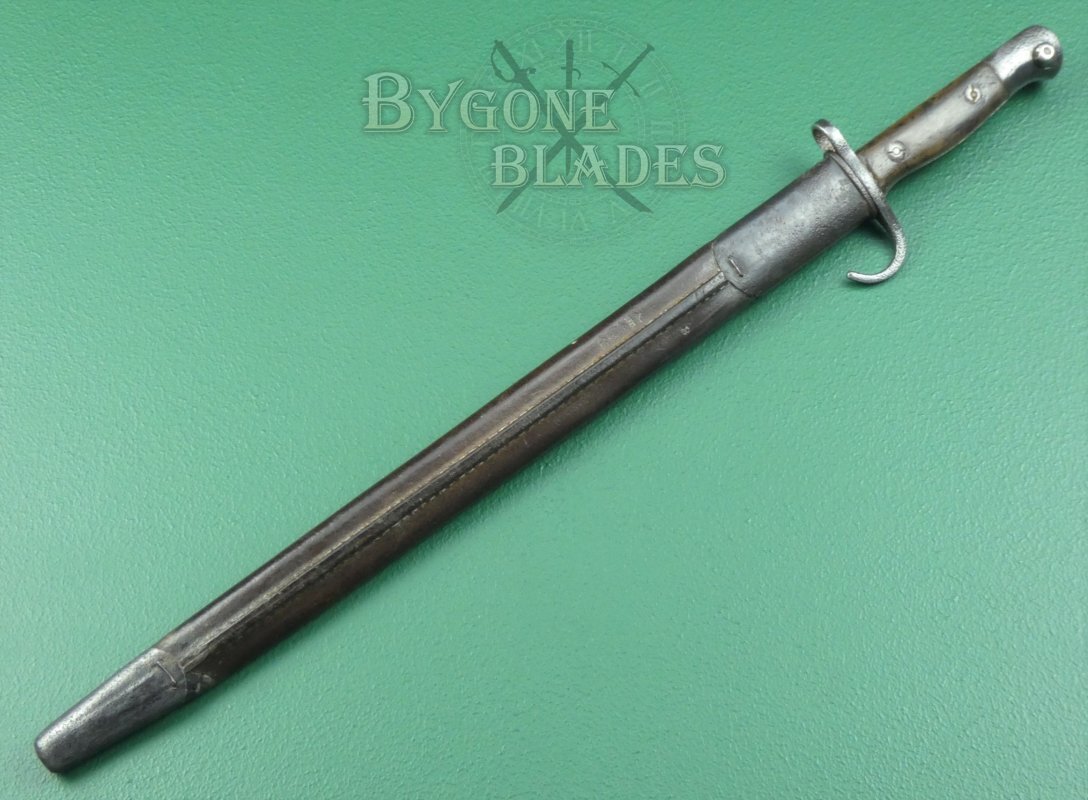
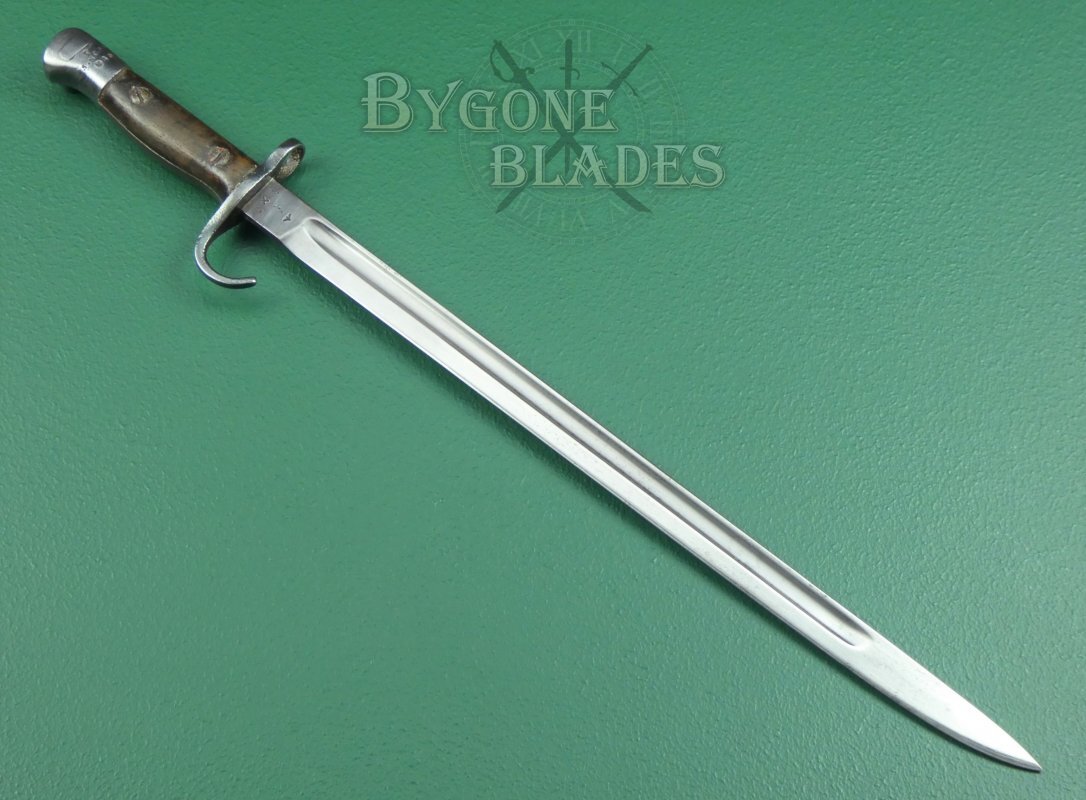
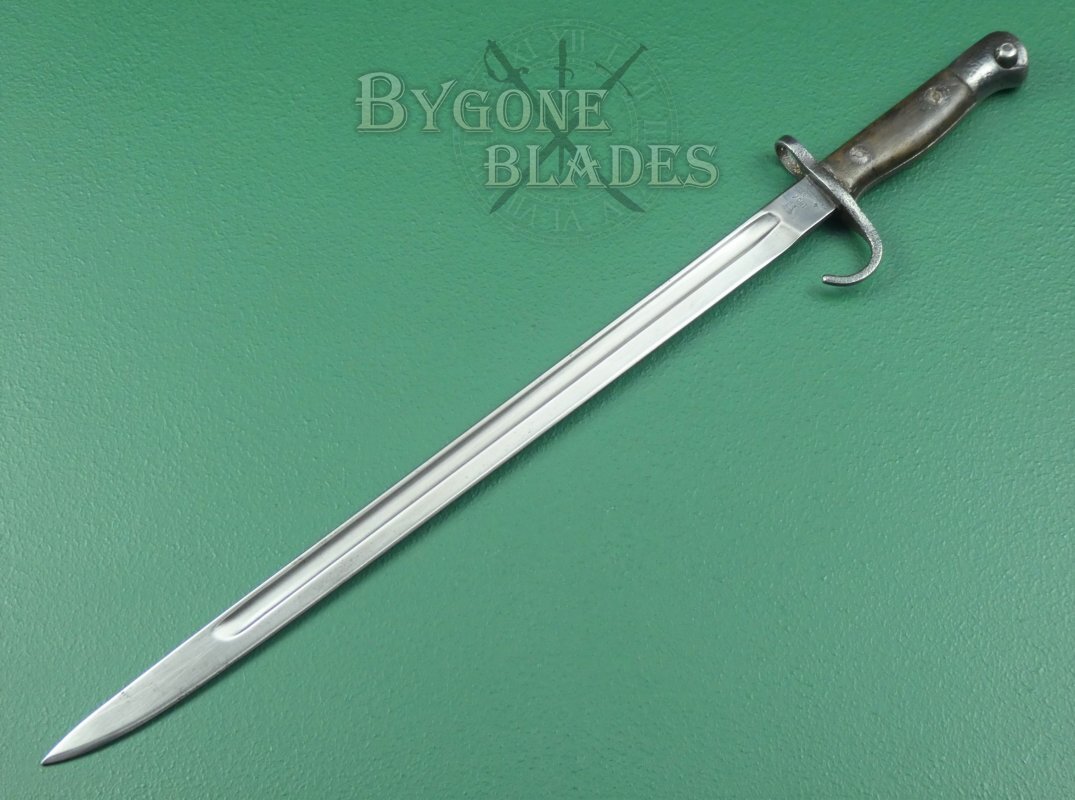
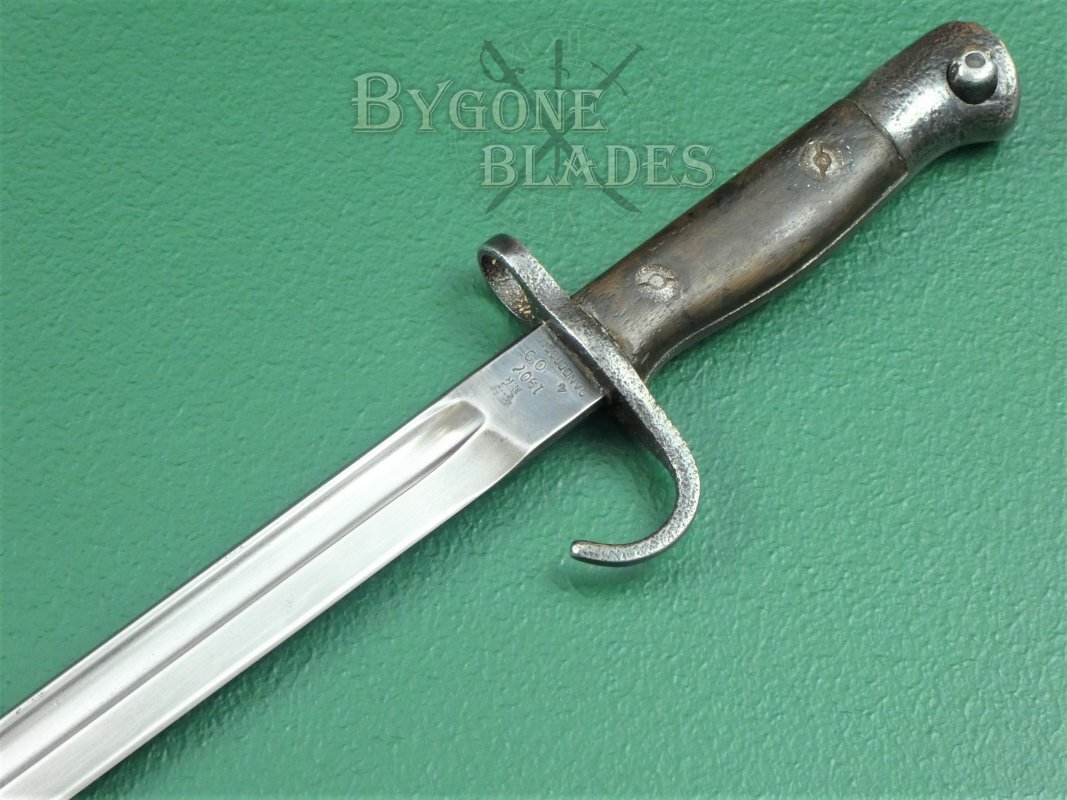
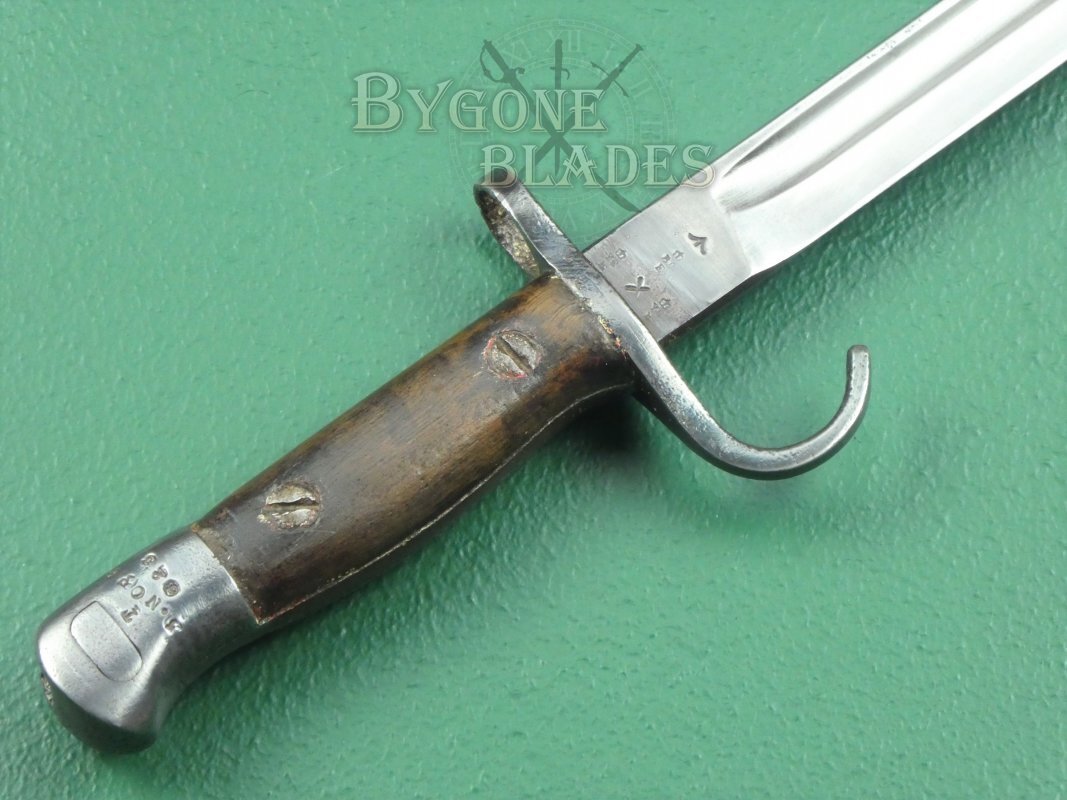
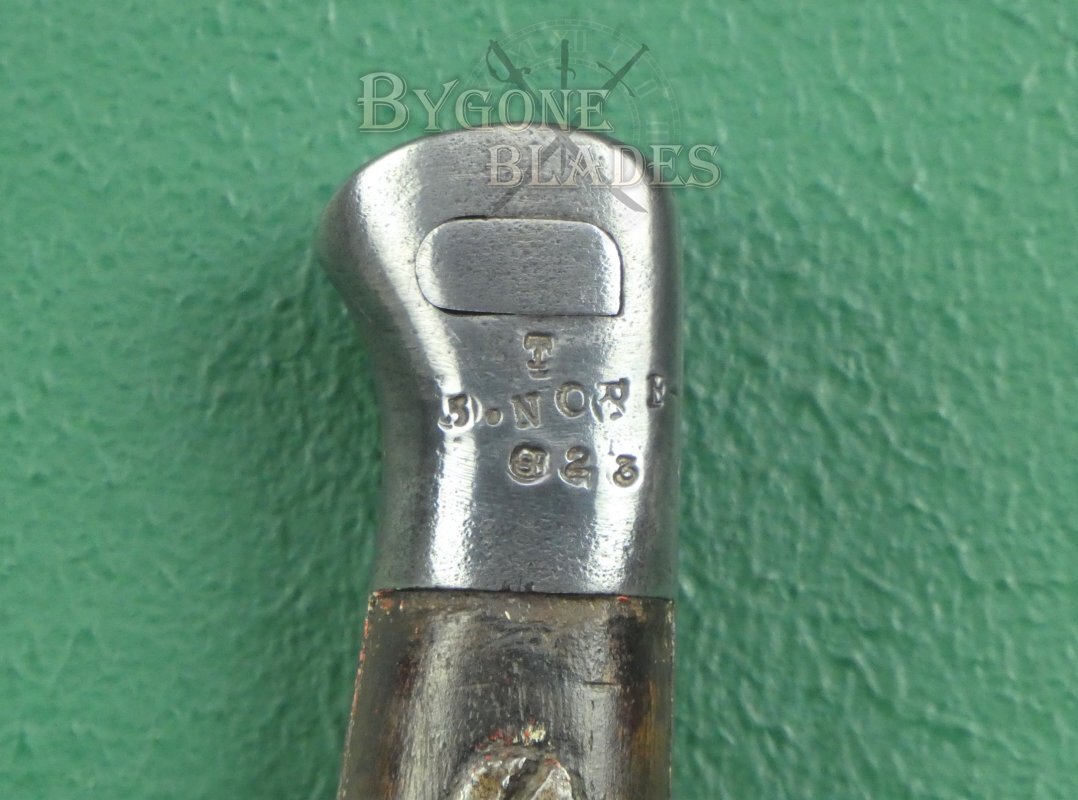
Rare pre-World War One Hooked Quillon bayonet made by Sanderson in April 1909. The bayonet is marked to the 5th (Sandringham) Battalion of the Norfolk Regiment. The 5th Norfolk battalion was a territorial battalion created by King Edward VII and consisted predominantly of the workers on his Sandringham estate. Although a myth was circulated that the 5th vanished without a trace during the Gallipoli campaign in World War I, the now established facts are that the battalion took horrific losses, casualty lists recorded between 12th and 31st August 1915 record 11 Officers and 151 Other Ranks killed. The heaviest losses occurred on the 12th August 1915 at Kuchuck Anafarta Ova, Gallipoli, when the battalion advanced along a sunken road into a farm. Few men returned, and many survivors were captured by the Turkish forces sparking the rumour that the battalion vanished without a trace.
The 433mm, single edged blade has a long narrow fuller and slightly rounded spine. The edge was service sharpened. The blade is bright and clean with light scratches but is in overall very good condition.
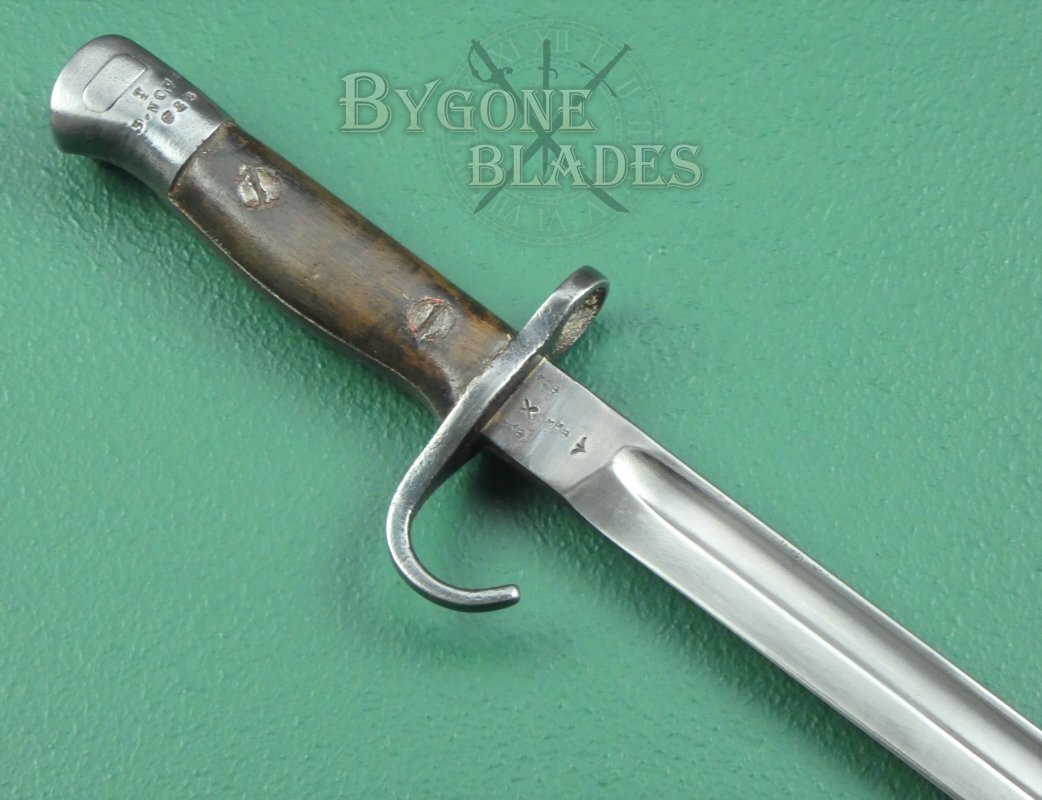
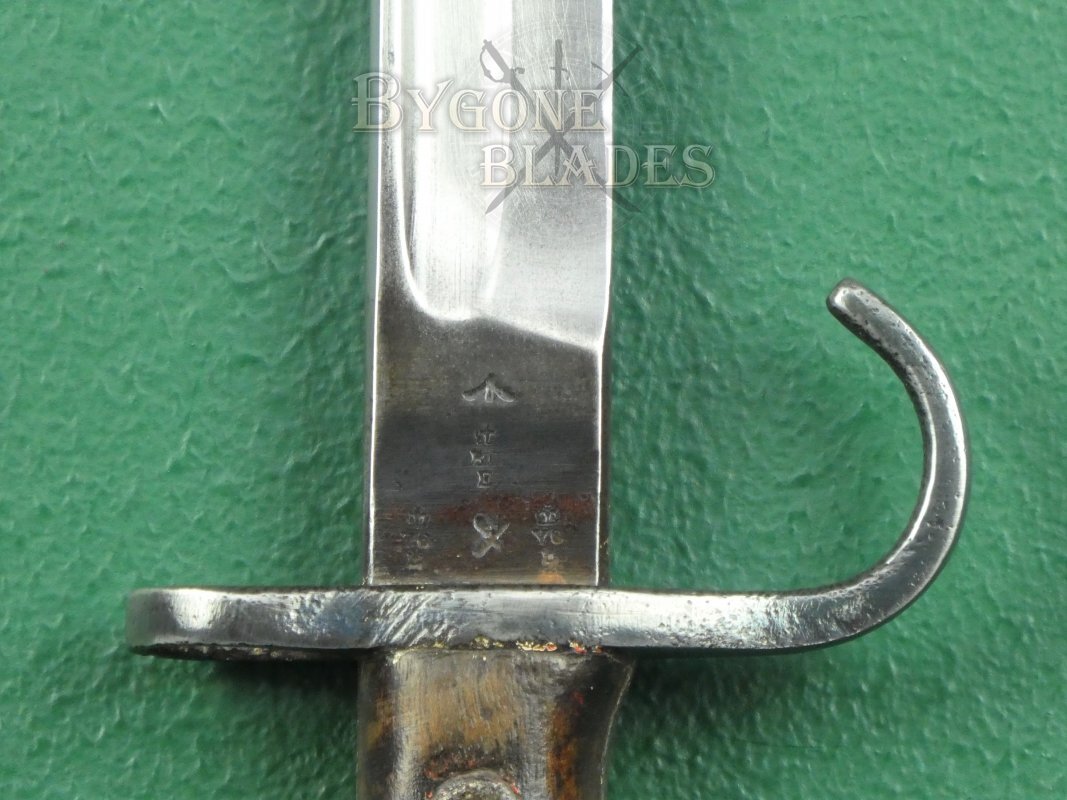
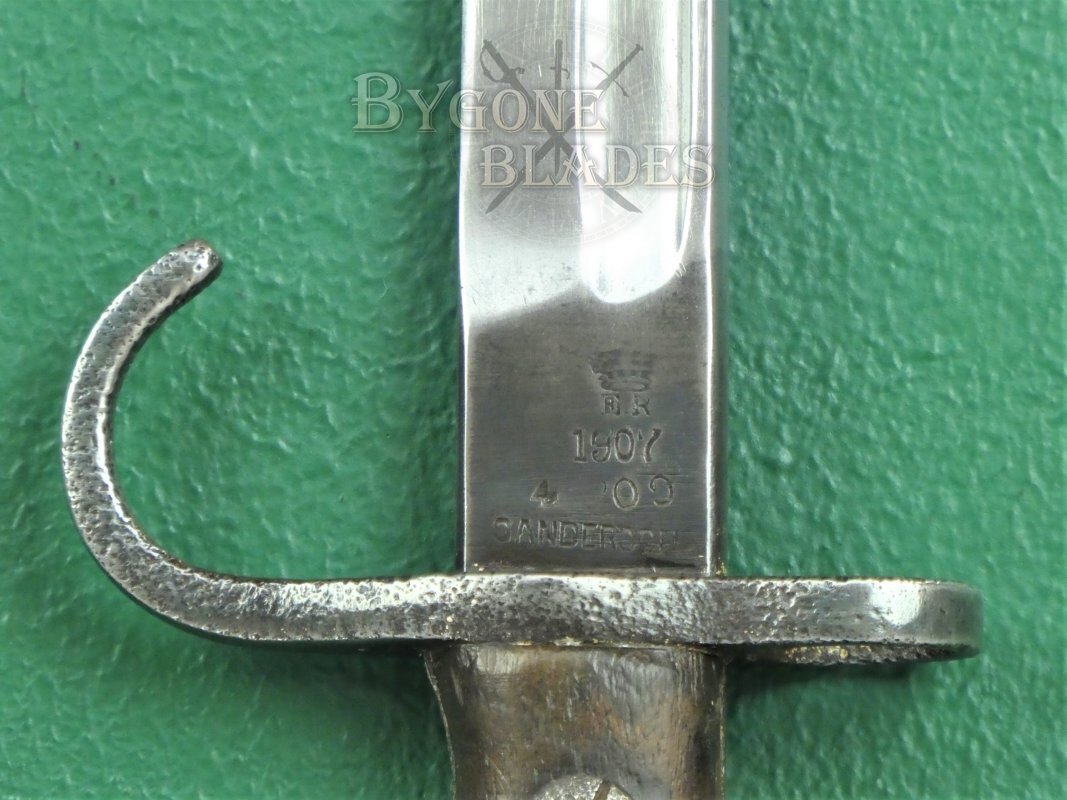
The ricasso retains its blueing and is marked with a crown and E.R (Edward VII) over the pattern date 1907 and the date of manufacture 4 ’09 (April 1909) below which is stamped “Sanderson.” The obverse ricasso bears the War Department broad arrow, bend test stamp and three inspection stamps.
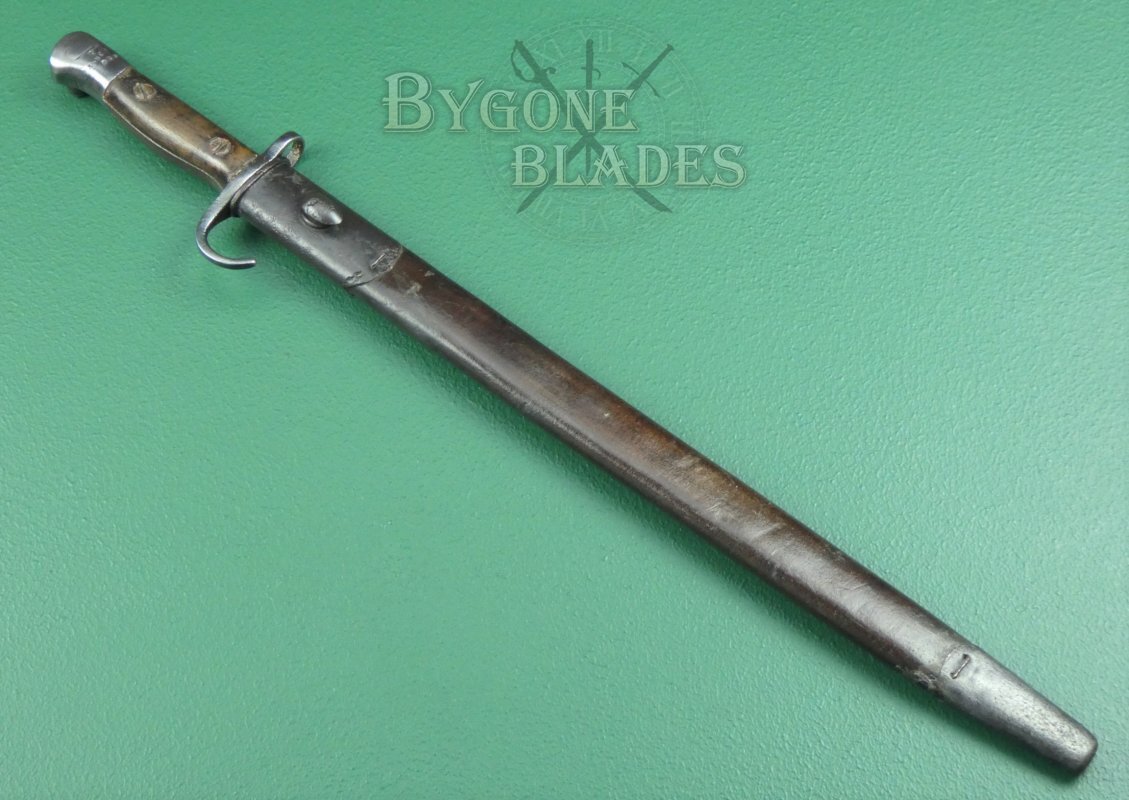
The hooked quillon cross guard, muzzle ring and pommel are in good condition with a crisp working press stud and locking mechanism. There is wear to the blued finish and the hooked quillon and one side of the pommel have shallow pitting. The wooden grip scales are in good condition with age related wear and staining. The scales are held firmly in place by the two original screws. The pommel is stamped with T over 5. N.O.R.F., over the weapon number 823.
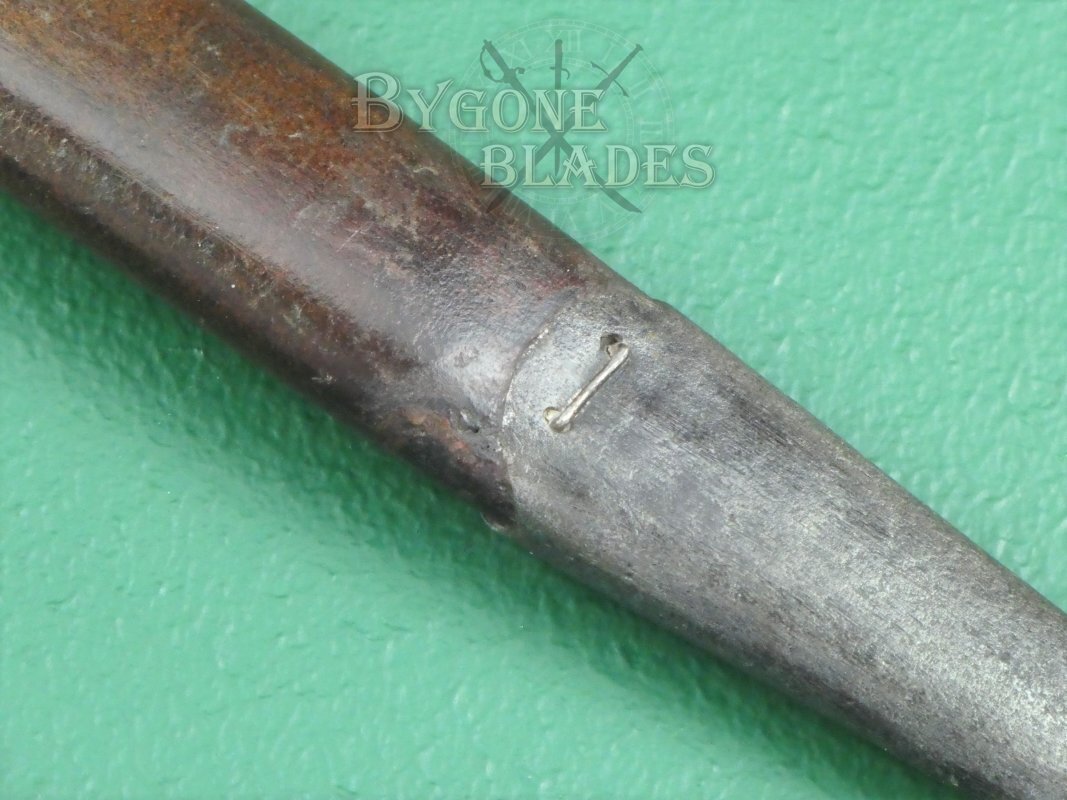
The bayonet is complete with its No.1 Mk ll brown leather scabbard with a teardrop stud. The scabbard is in generally good condition with an old, nearly invisible repair to one edge the leather above the chape. The leather and stitching are sound and the body of the scabbard is stamped with a War Department arrow, EFD mark, inspection mark and the date ‘09. The locket and chape have wear and some pitting. The bayonet sheathes and draws smoothly and is held firmly within the scabbard.
This is a good example of an iconic and rare British hooked quillon 1907 bayonet, with rare and history rich unit markings.