As you know, President Trump has decided that all USA citizens must pay import taxes on any items bought from overseas. He has withdrawn the $800 pre-tax allowance on imports and has also cancelled the exemption for antiques.
The amount of import tax payable is dependent on the country of manufacture of the item, NOT where it was bought/imported from.
For example,
The tariff on UK made items is 10% of the total amount, including the shipping fee.
On items manufactured in mainland Europe, the tariff is 15%.
Some countries incur a much higher percentage.
President Trump has insisted that these fees be paid BEFORE the item is imported, or the parcel will be refused entry into the US.
This basically means that Bygone Blades has to collect the US import tax from you and submit it to the carrier, who in turn pay the US customs.
After you have made your purchase, you will receive a separate invoice for the new import tax specific to the item purchased. This will need to be paid before your purchase is shipped.
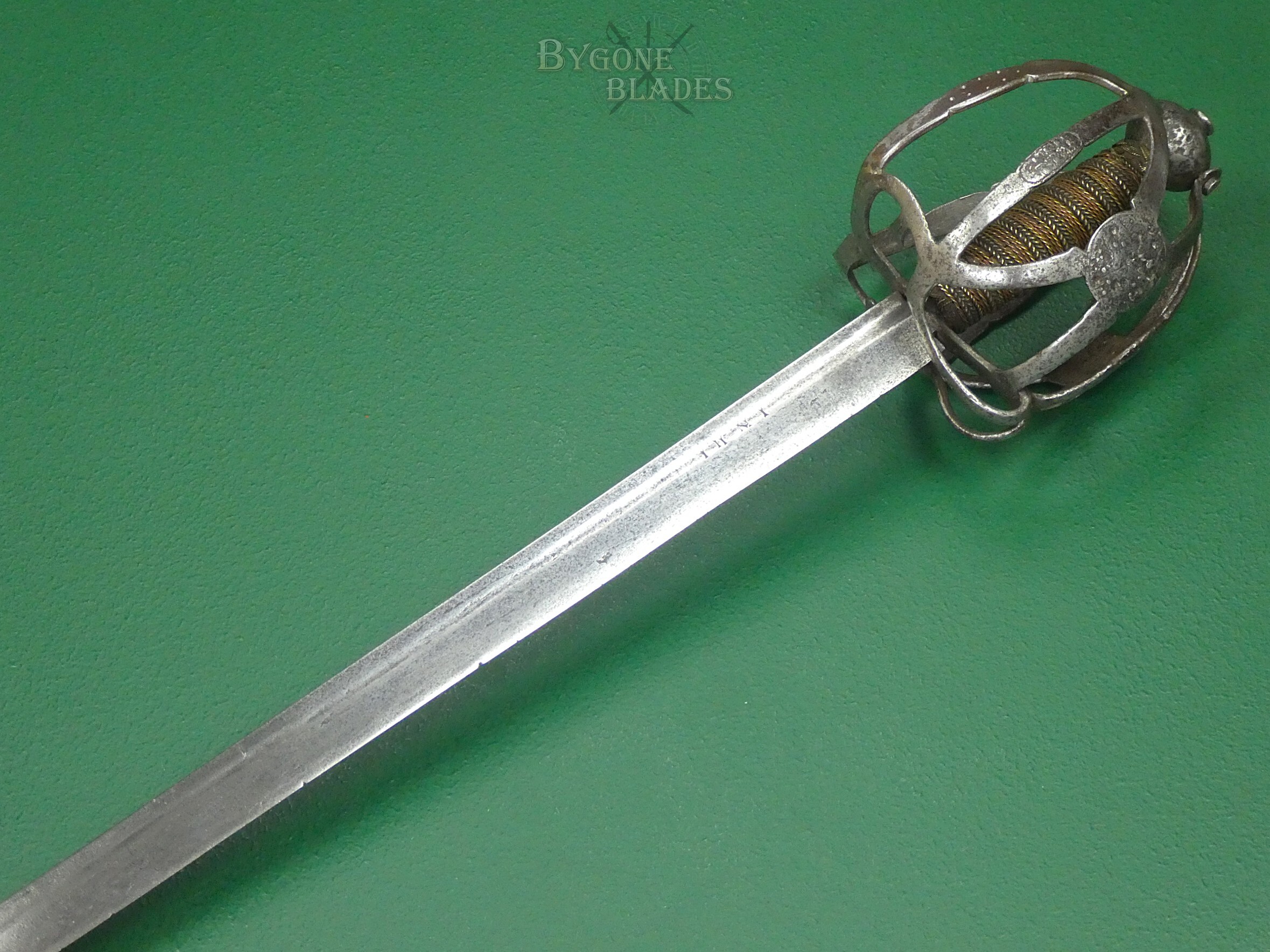
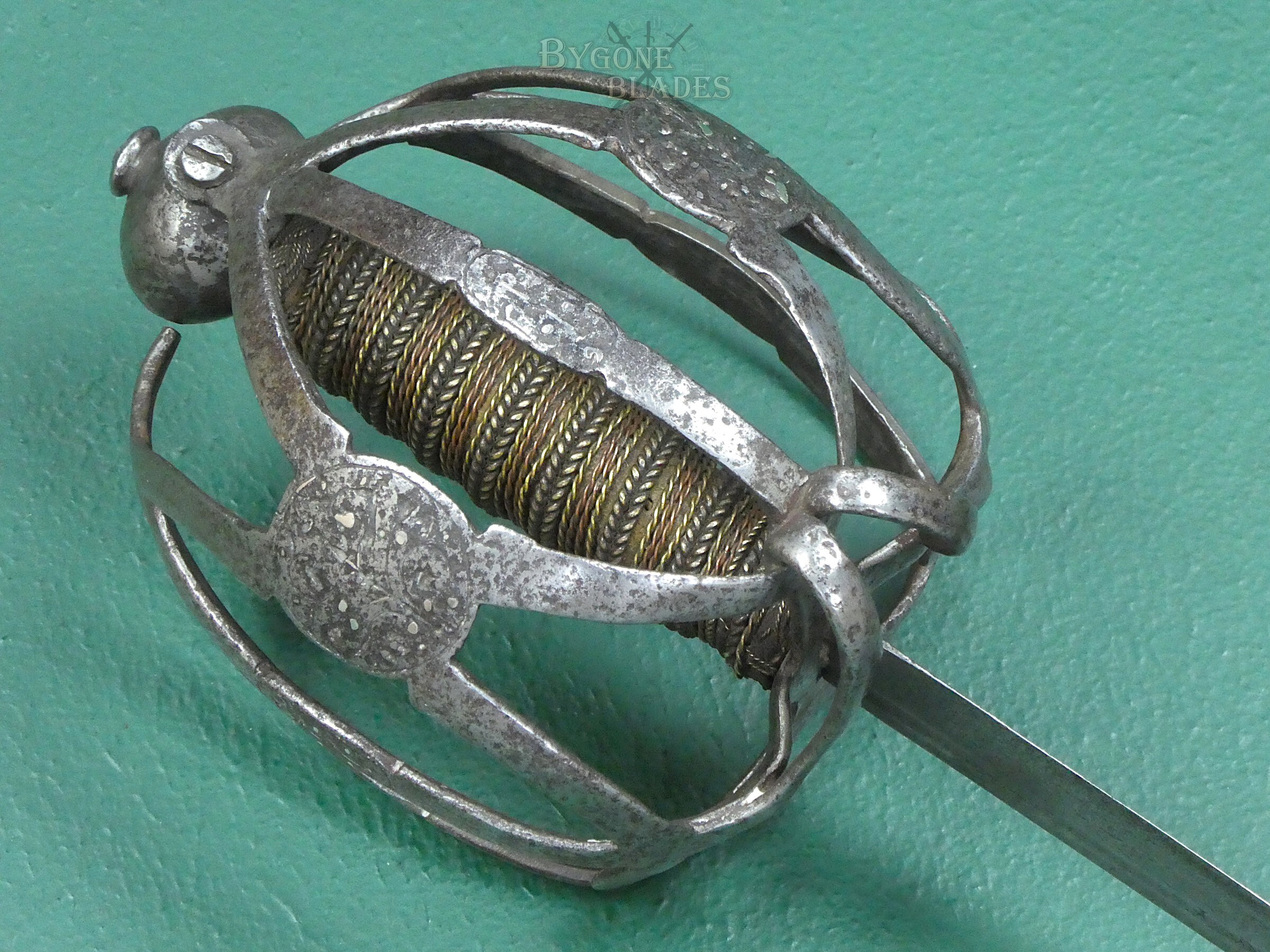
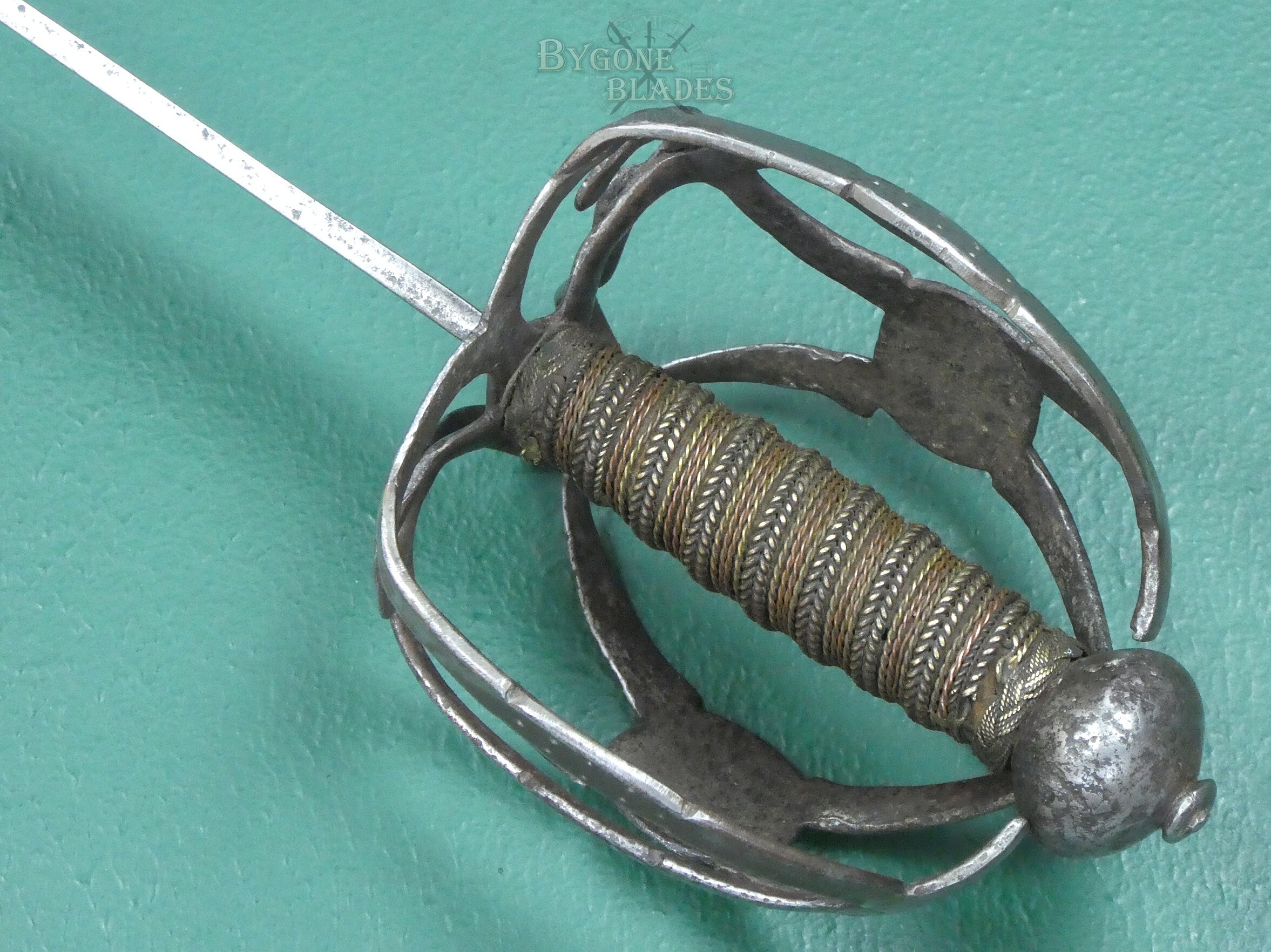
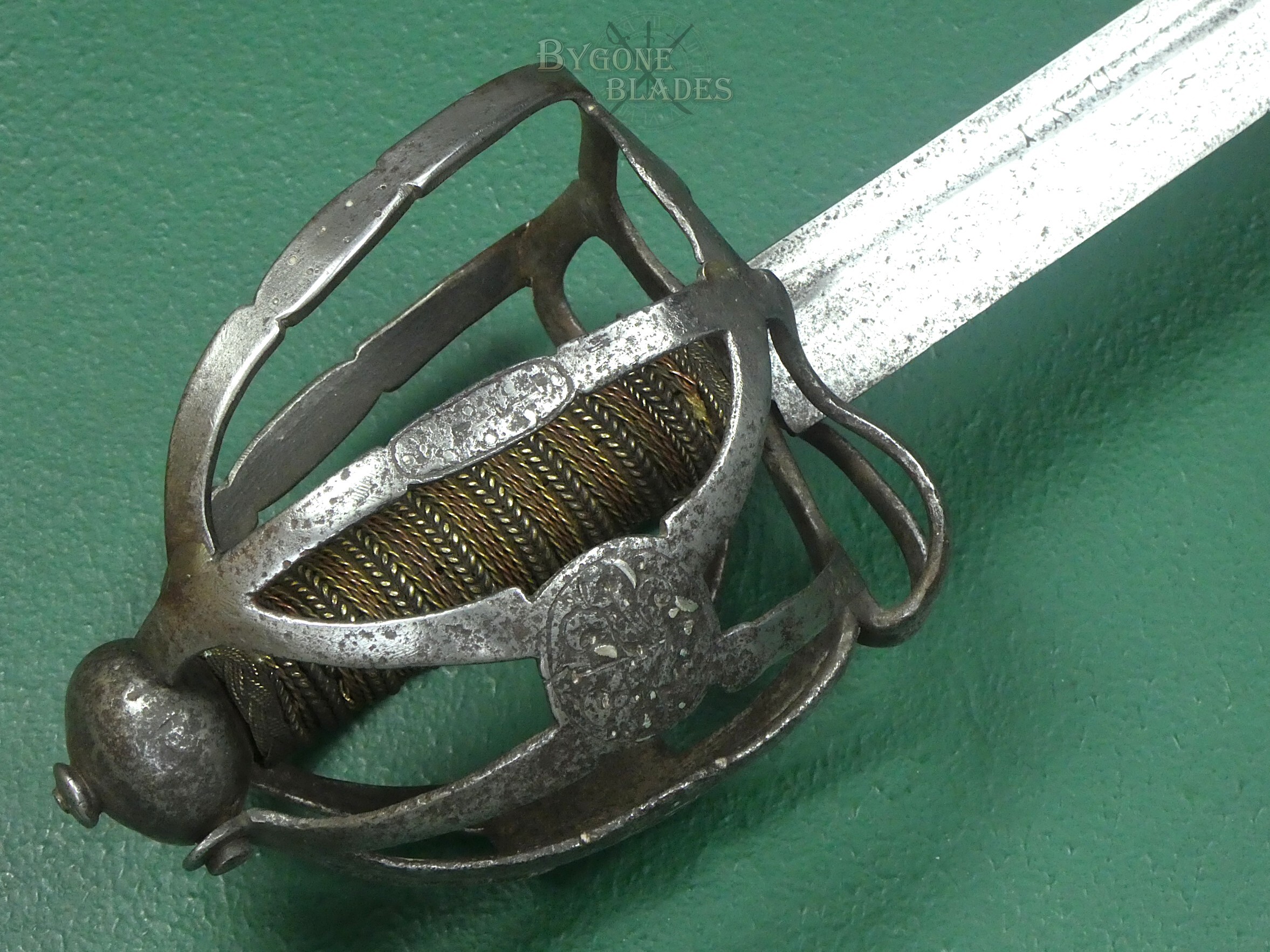
17th Century Irish Basket Hilted Backsword. Circa 1620
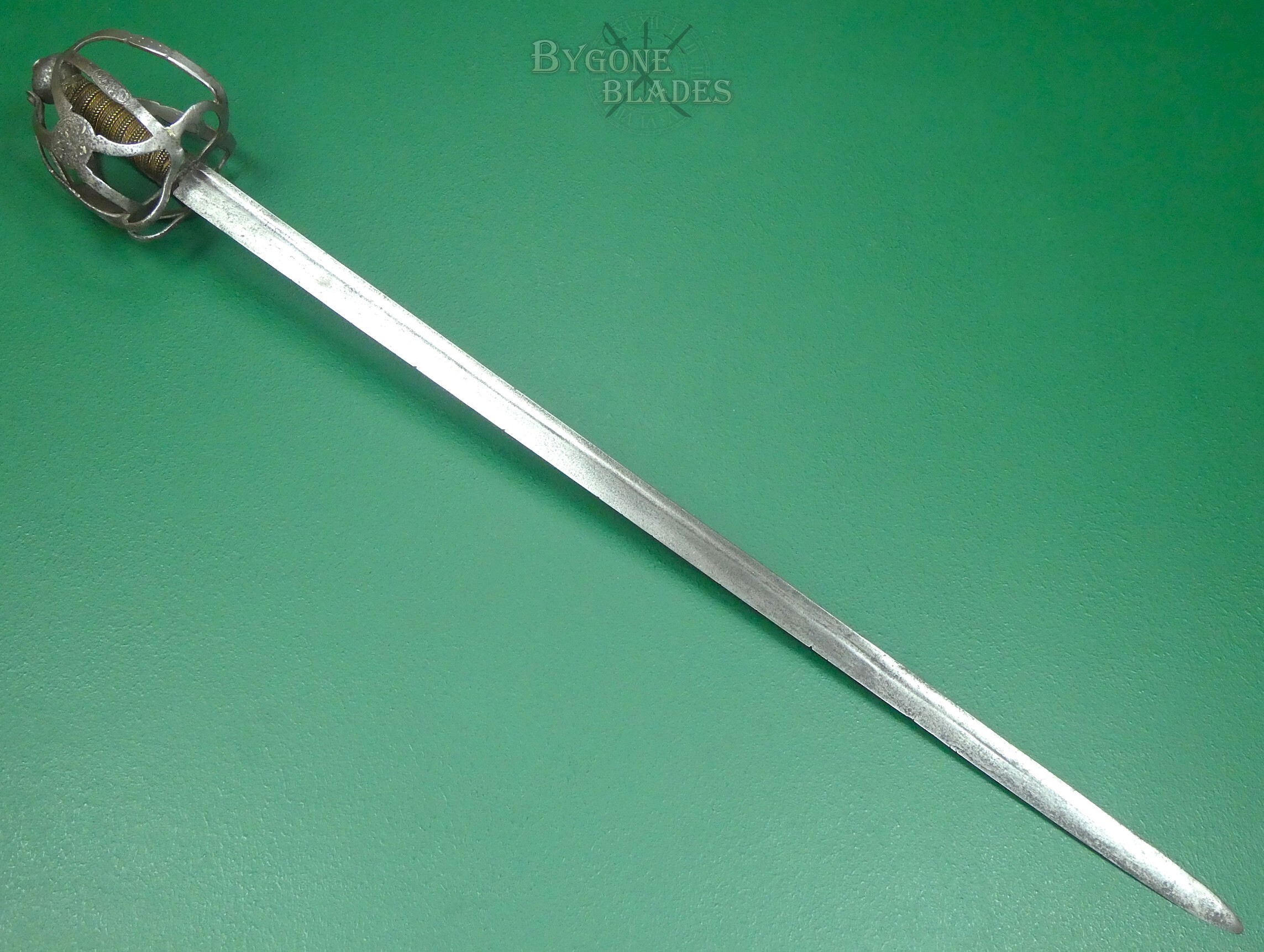
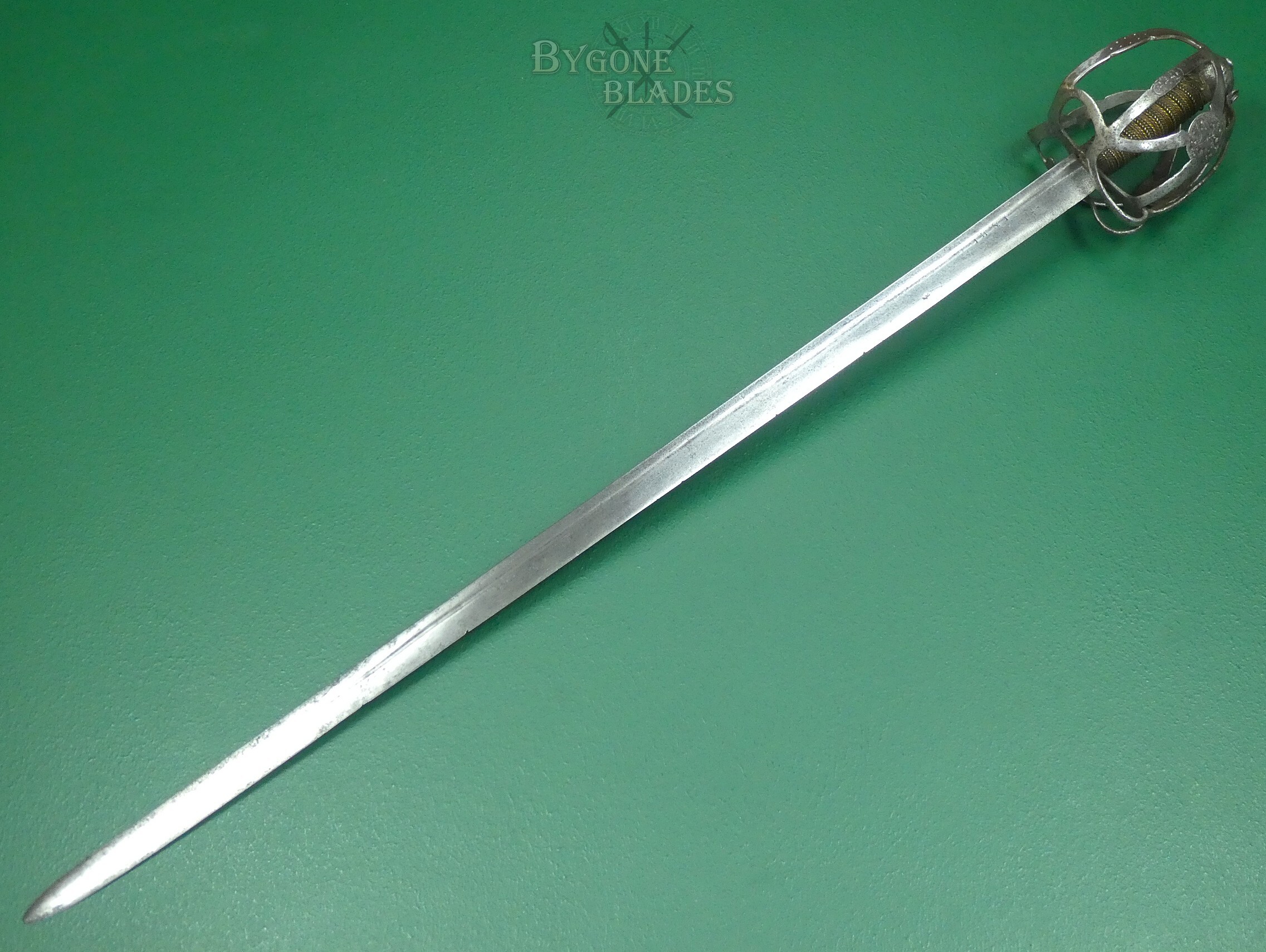
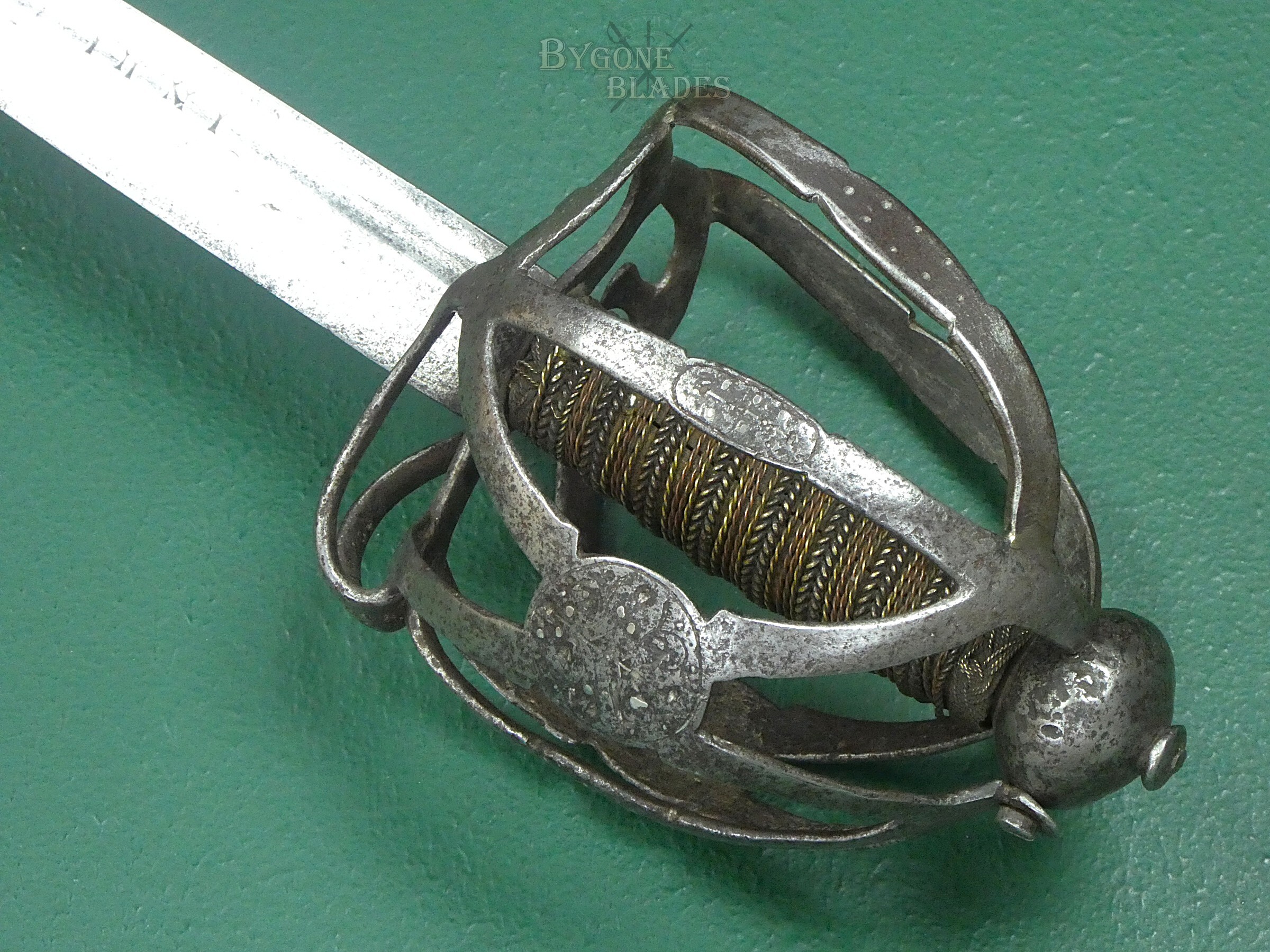
This rare 400-year-old sword is an Irish basket hilted backsword dating to around 1620. The Irish basket hilt first appeared in the early 17th century and remained popular until the middle of the century.
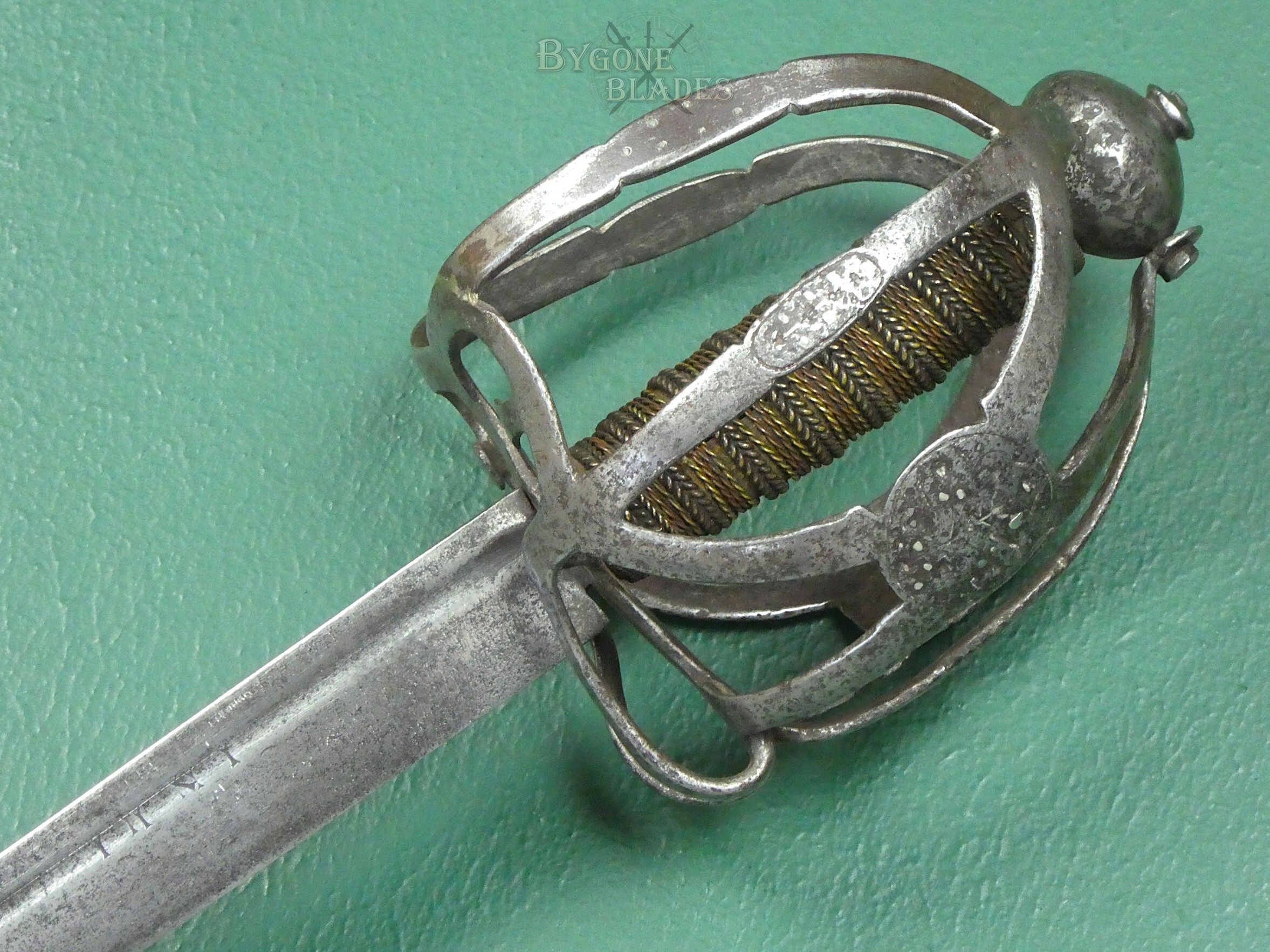
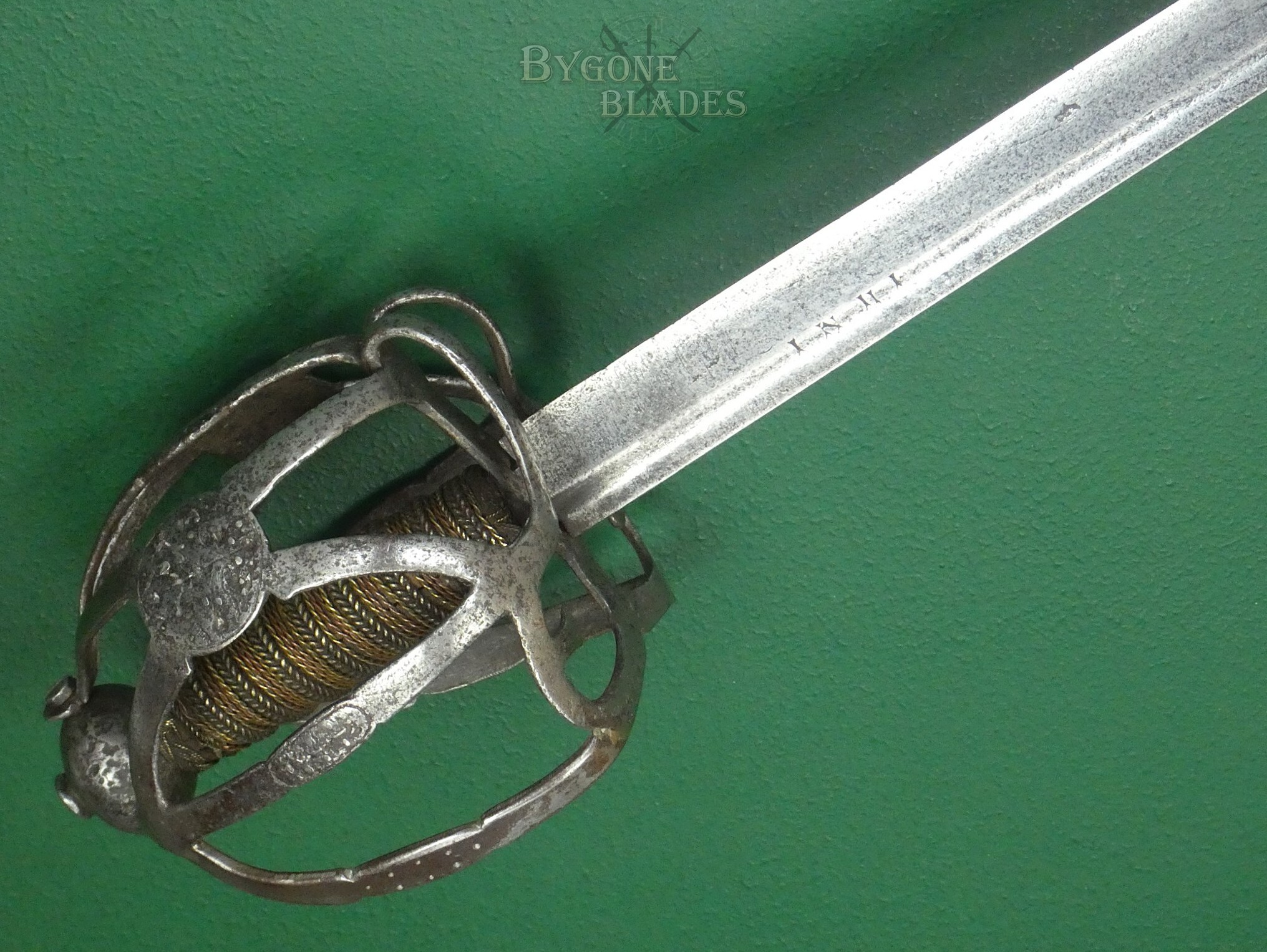
The 836mm single-edged blade has a flat spine above a narrow fuller and tapers to a double-edged point. The blade is double-edged for the first 270mm and is in good condition with a pleasing patina. The edges retain their sharpness and there are a few small nicks to the forward edge. The blade is straight and held firmly within the hilt.
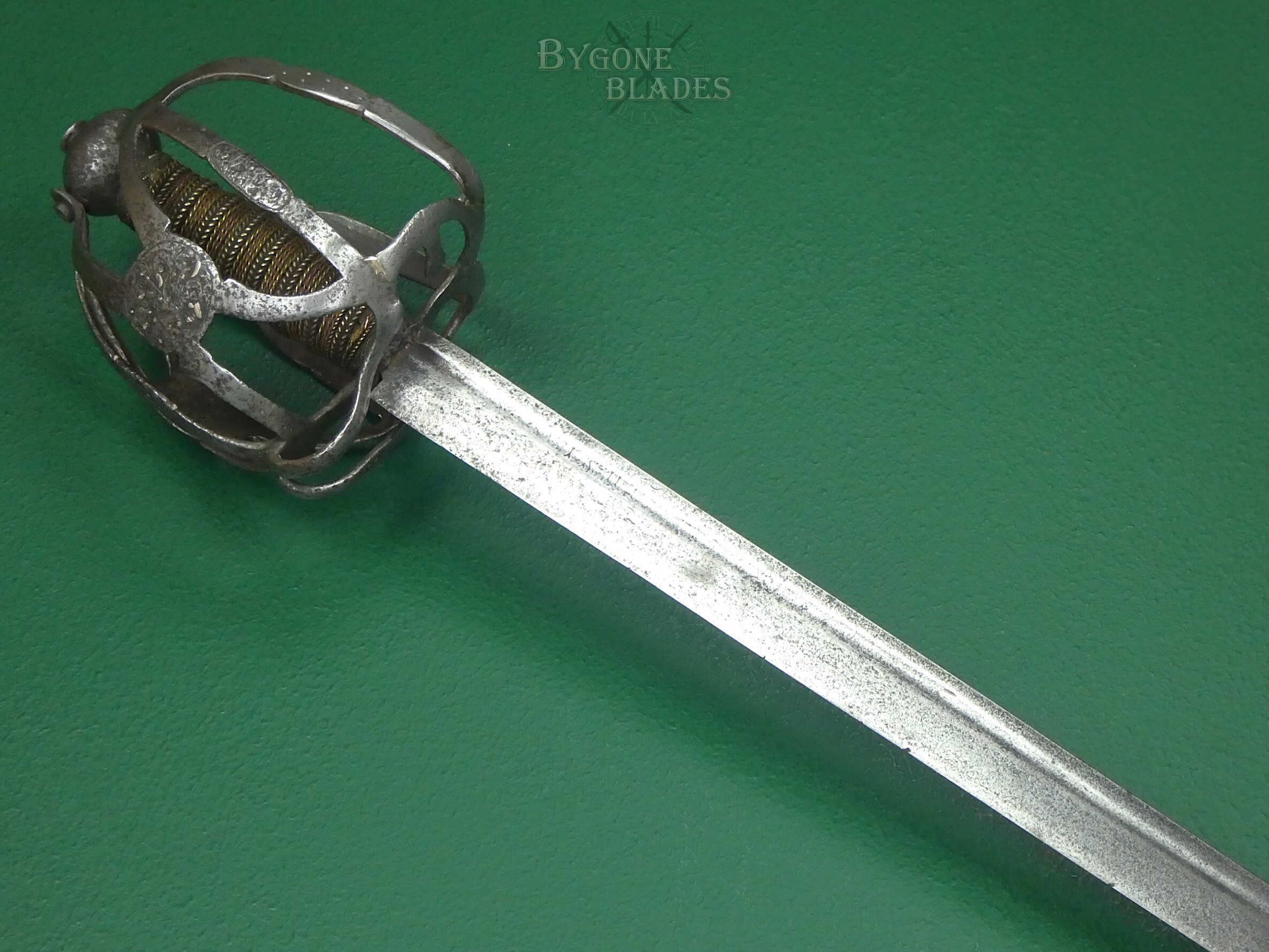
The fuller is stamped at the forte with the letters; INNI along with the worn remnants of eyelash marks and perhaps a running wolf. INNI is a well-documented engraving error or modern misreading of the religious acronym "INRI." Both spellings are found on 17th Century trade blades from Solingen and Passau. The abbreviation stands for the Latin phrase “Iesus Nazarenus Rex Iudaeorum,” (Jesus of Nazareth, King of the Jews).
During the early 17th century, devotional and talismanic markings experienced a massive surge in popularity across Catholic Europe. Soldiers frequently ordered swords featuring religious inscriptions like "INRI" or "MARIA" to place themselves under divine protection on the battlefield.
Many bladesmiths and pretty much all of their apprentices were illiterate. Marks on blades were stamped letter-by-letter using individual hand-cut steel dies. It was quite common for letters like "R" to be accidentally inverted, replaced, or stamped poorly enough to look like an "N".
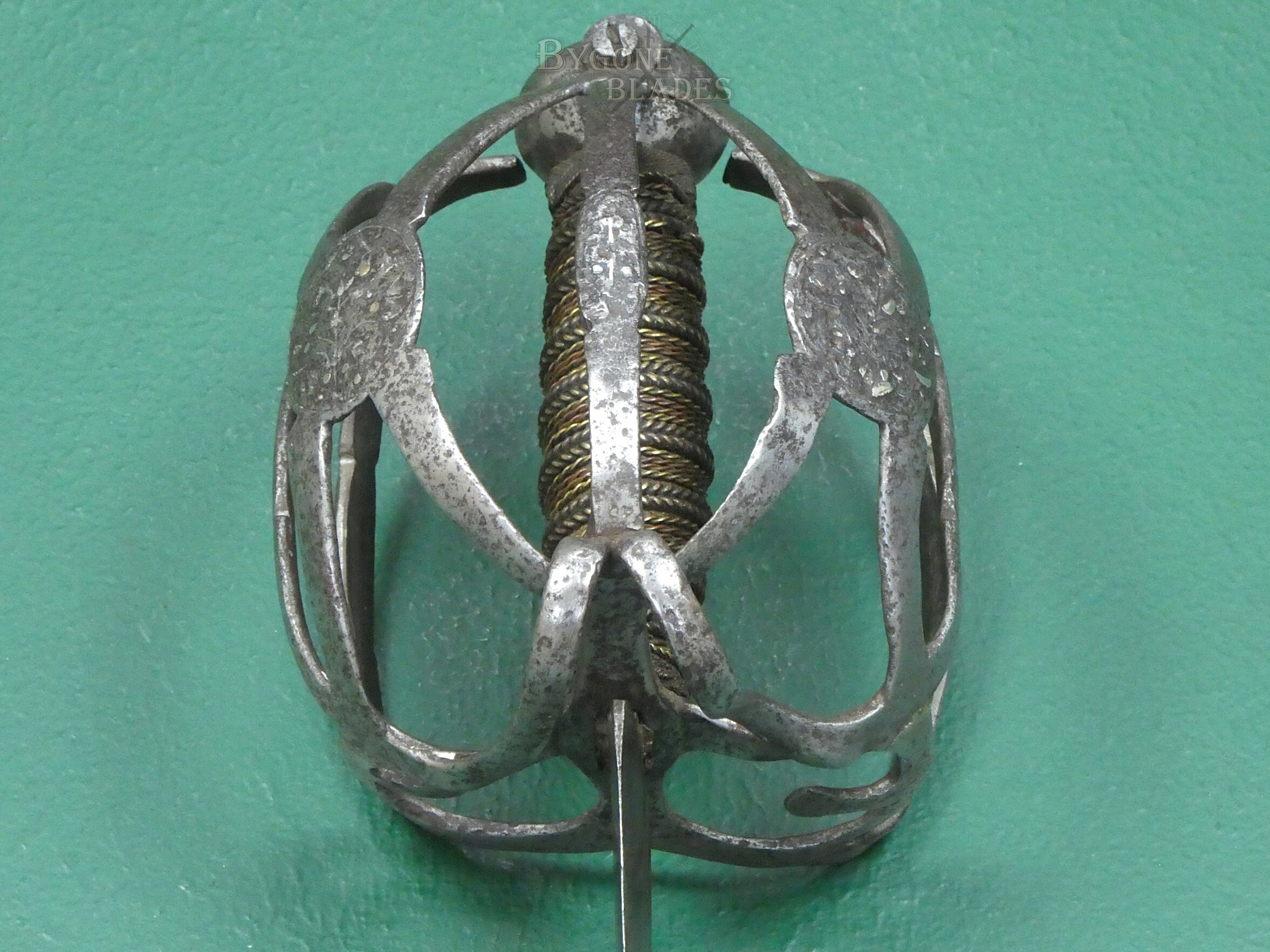
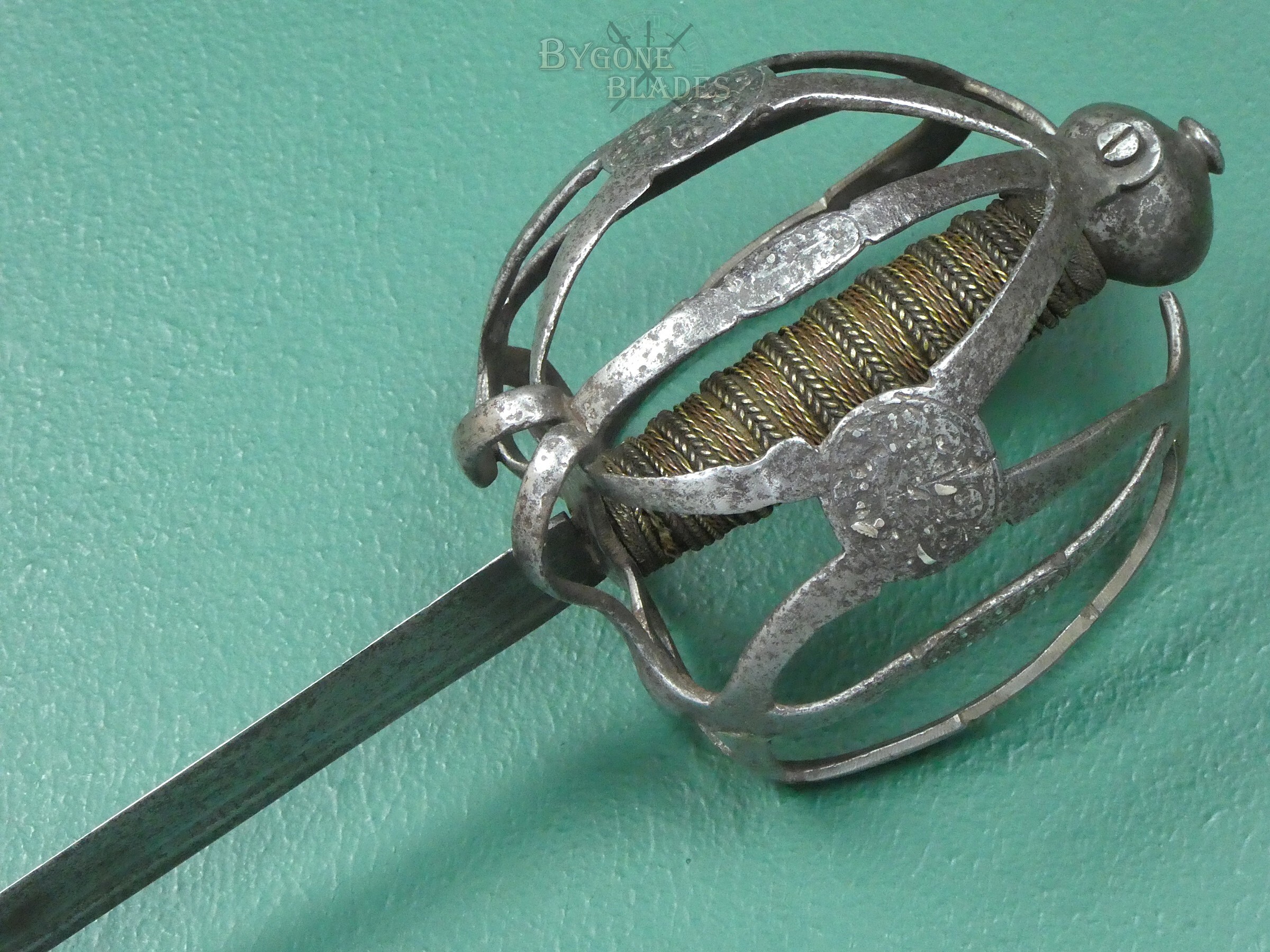
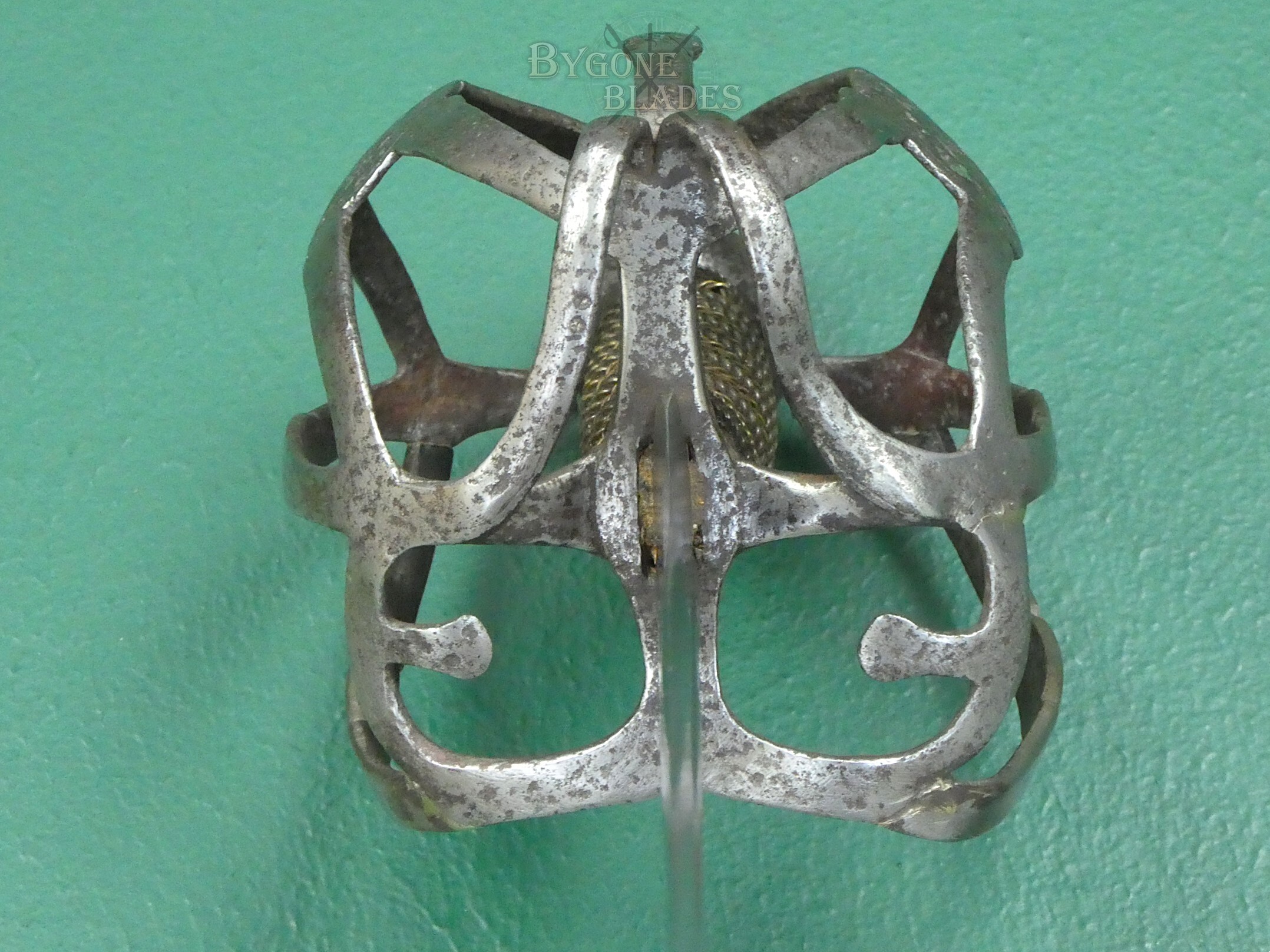
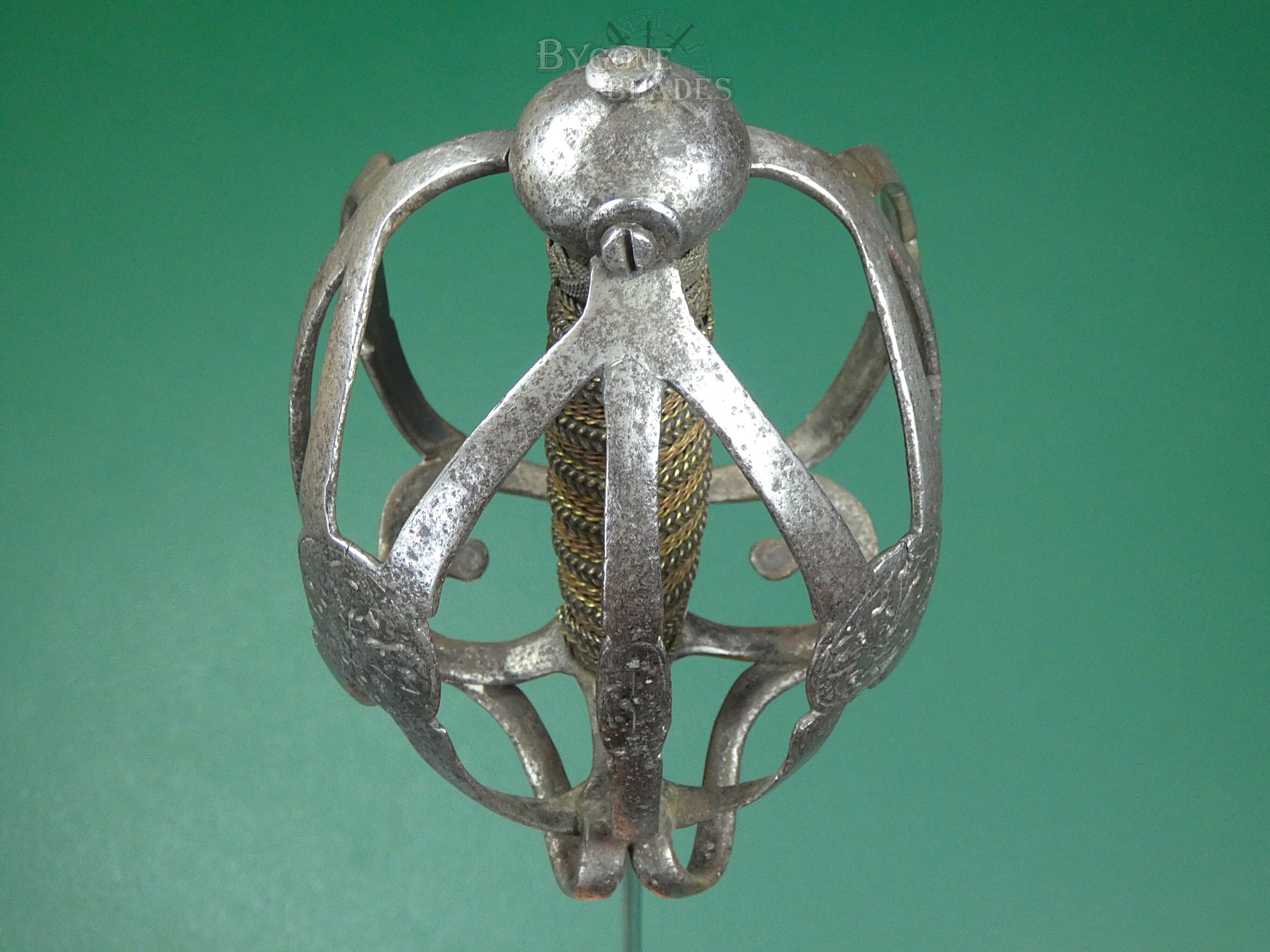
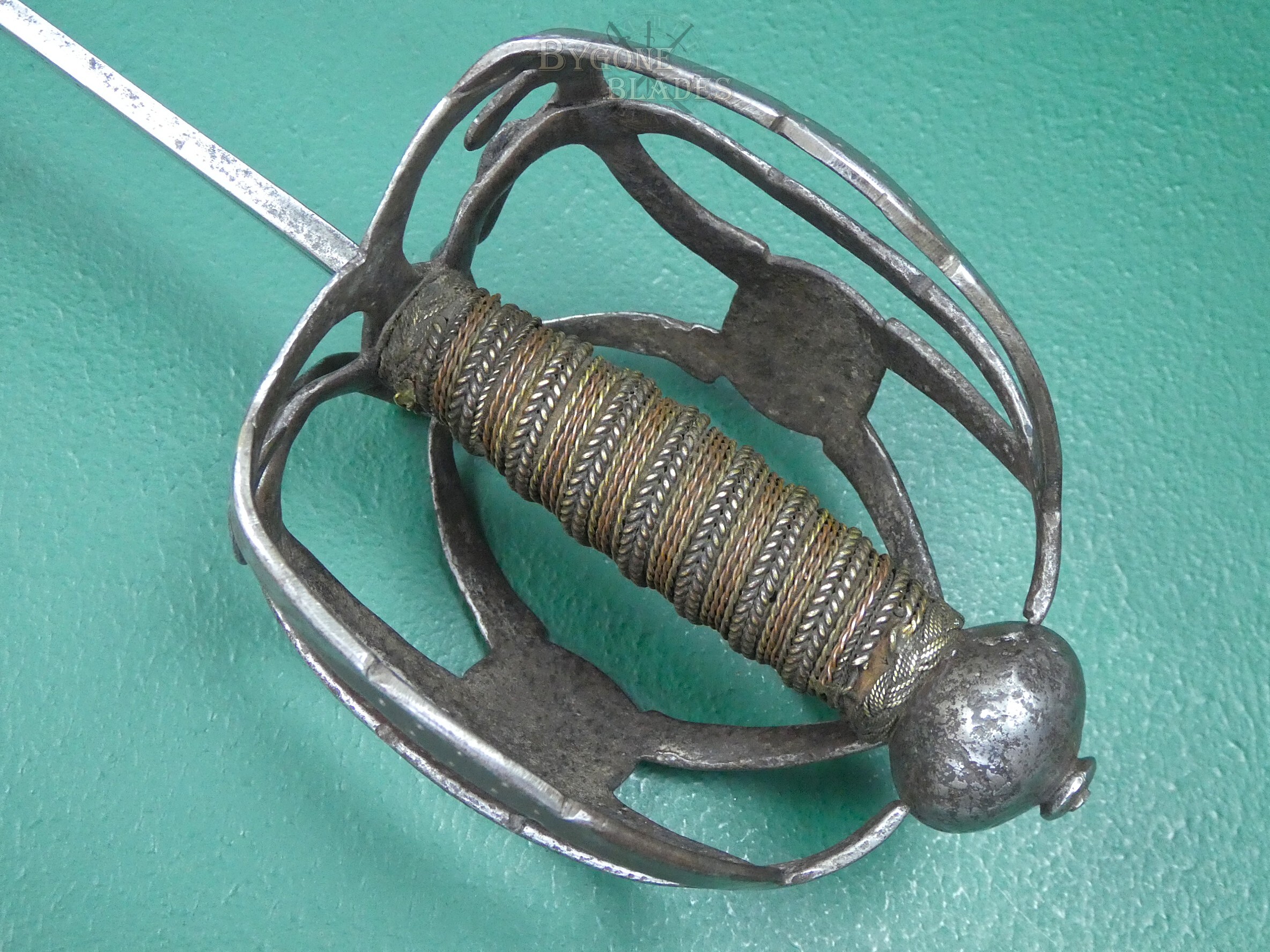
The Irish hilt is formed of a guard of flattened iron bars forming pointed ovals with shorter junction bars arranged diagonally (like a Saltire) with round plates at the centre. The plates and flanking bars are incised with a design of fruiting plants encrusted with silver. The front of the basket guard is screwed to the large spherical pommel.
Guard is in good condition and retains remnants of encrusted silver decoration. The wooden grip retains its original wire binding. The two rear bars of the guard are a sensitive restoration. The replacement bars were hand forged and based on their patina, braised to the original basket a long time past.
This is an excellent and rare early 17th Century Irish basket hilted backsword.
£4,995.00
I am 18+ I have read and agree to the terms and conditions of sale and shipping
Select your shipping region:
We are unable to ship to P.O. Box addresses. Please provide an alternative delivery address at checkout.