The Mahdist Revolution (1881-1898) was an Islamic revolt against the Egyptian government in the Sudan. Britain became involved in support of their Egyptian allies and the uprising was ruthlessly crushed. The Battle of Omdurman, which took place on September 2, 1898 saw the superior numbers of the Mahdist forces, armed predominantly swords (kaskara), spears and lances, decimated by the modern firepower of the British army.
Most kaskara in the UK today are battlefield trophies brought back by members of the British forces.
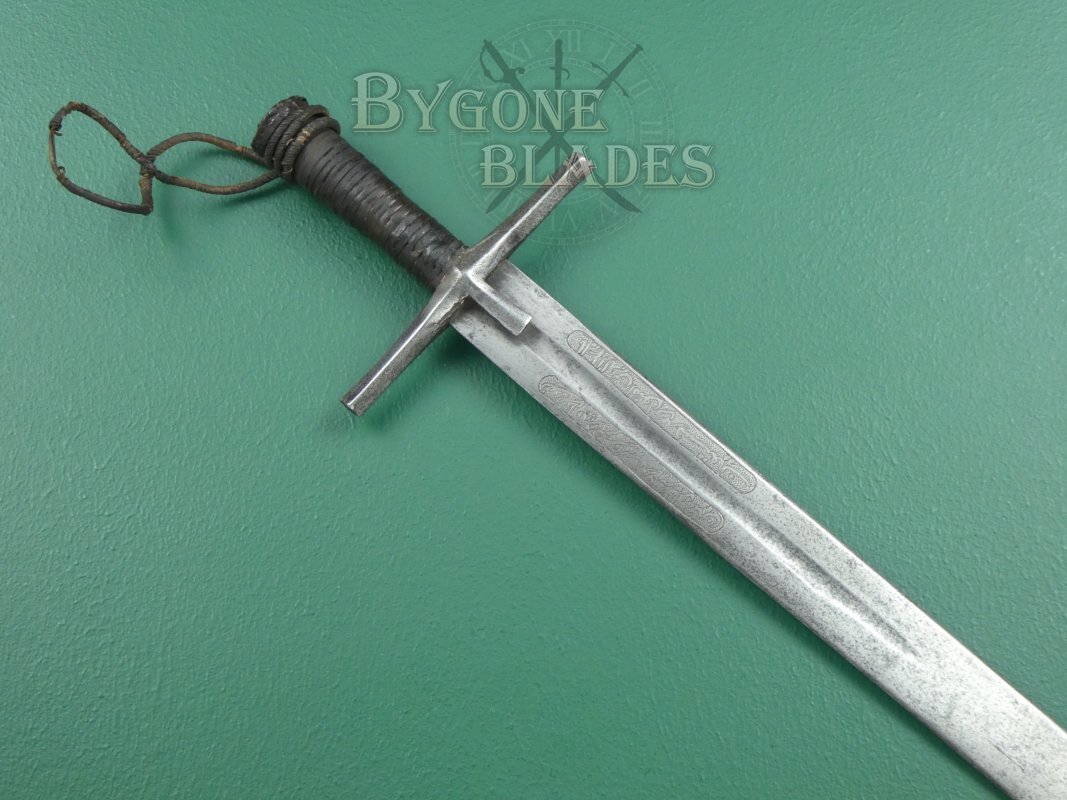
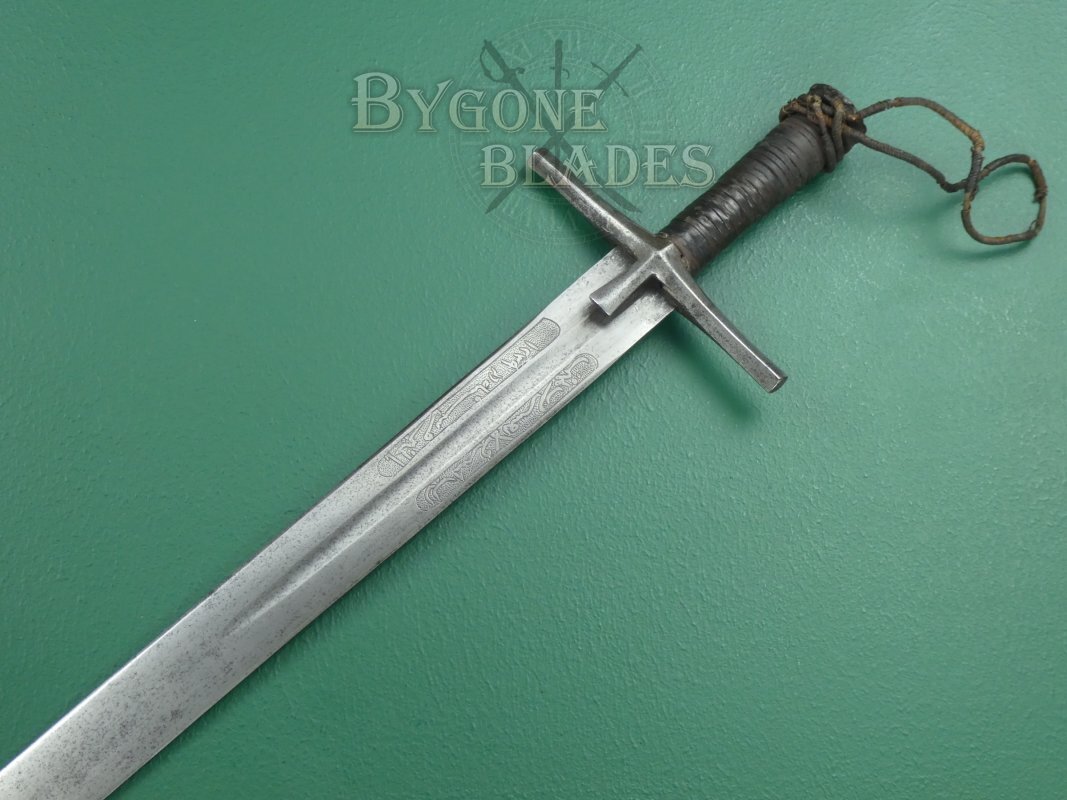
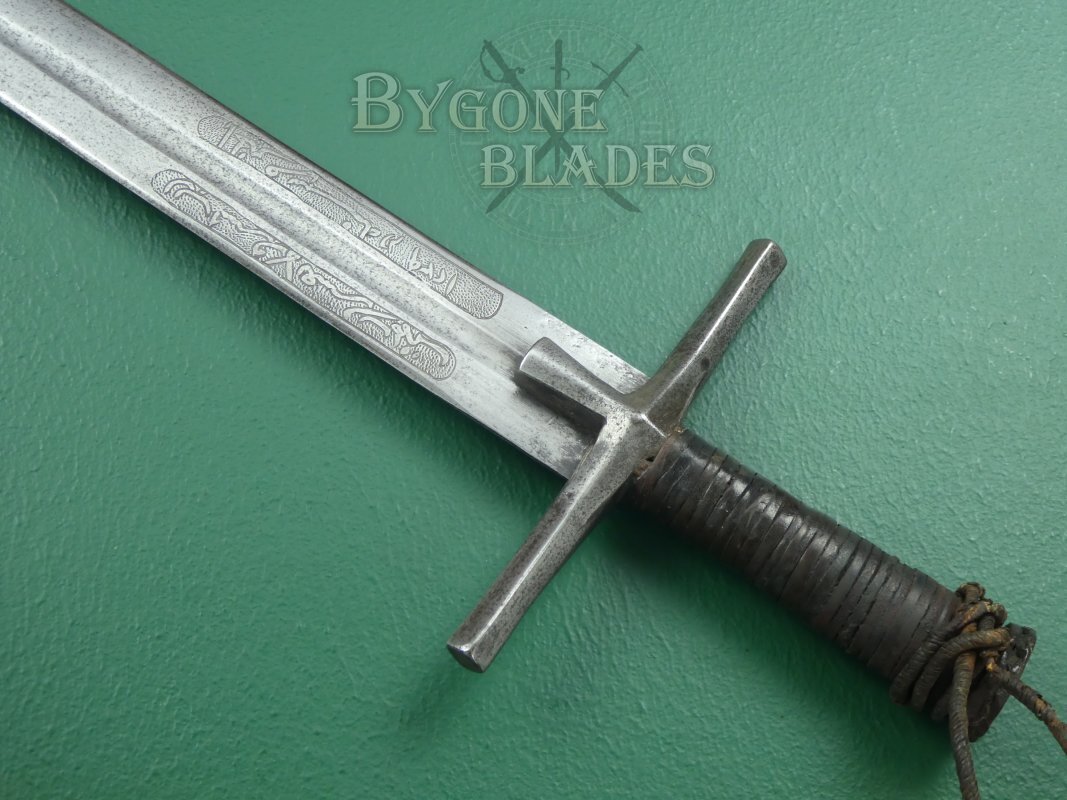
This early 19th Century kaskara is a great example of the cross-hilted broadsword favoured by the Mahdist forces. Kaskara are blade-heavy swords, double-edged and capable of cutting, they were in fact primarily used as thrusting weapons.
The 876mm double-edged, broadsword blade has a short central fuller on each side and terminates in a spear point. The edges were service sharpened. The broad blade is 44mm wide at the base.
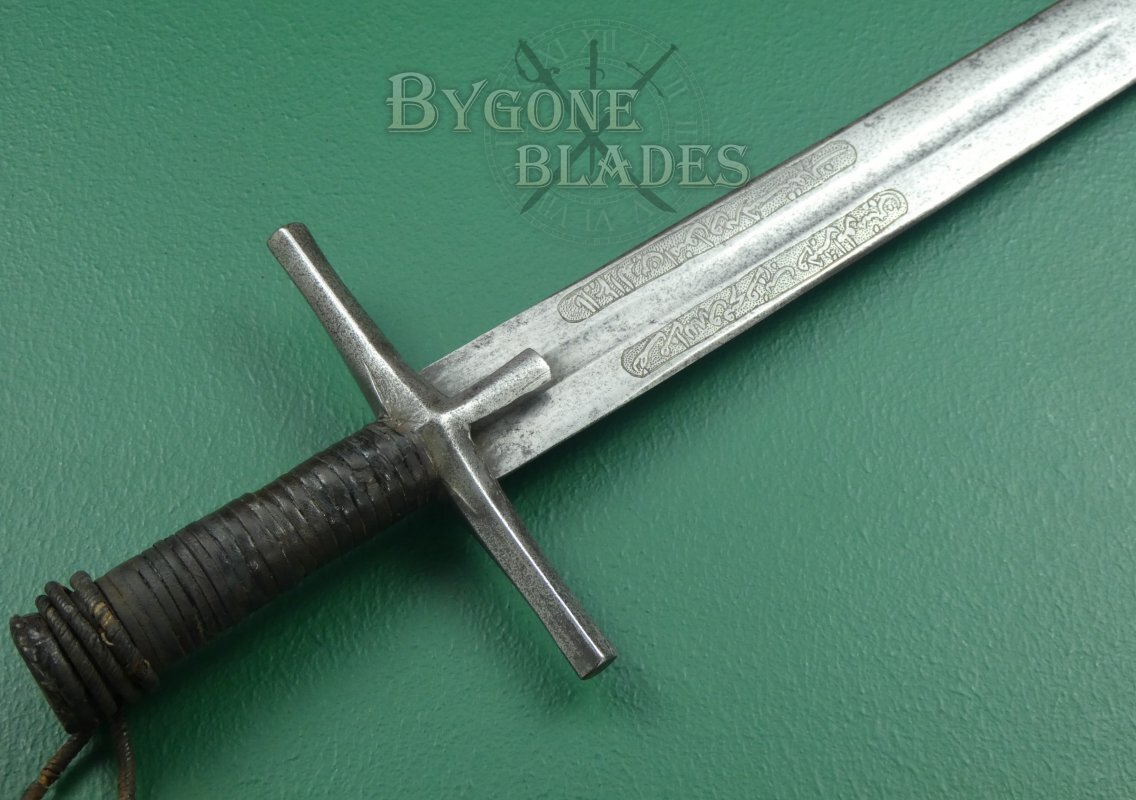
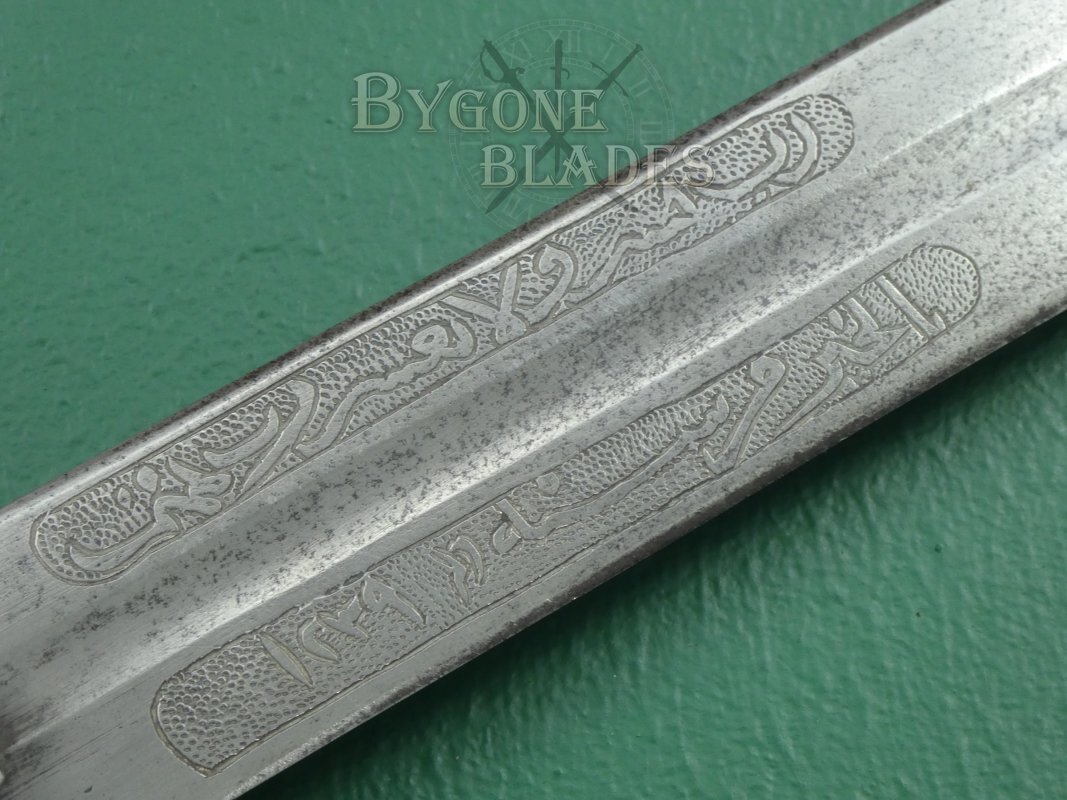
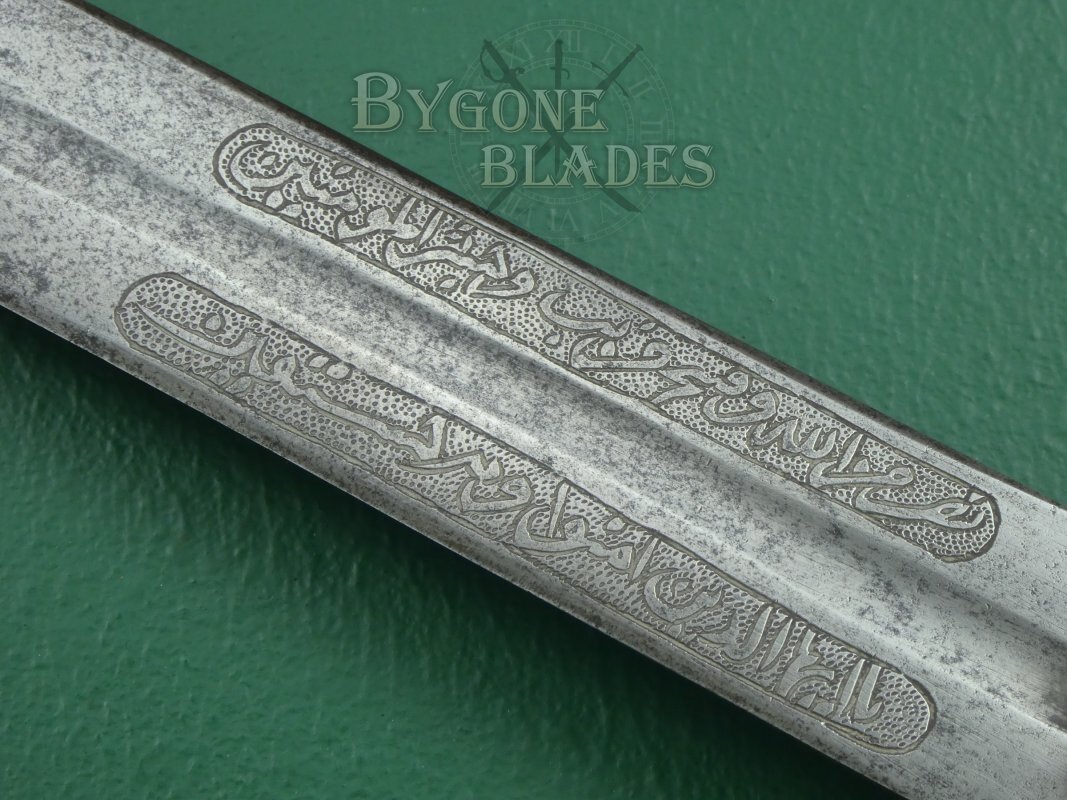
The blade has four engraved panels, two on either side of the fuller. At least two of these panels contain quotes from the Quoran in the Thuluth dialect, one panel begins “O those who are faithful…”
One of the two remaining panels contains the maker’s details. The Islamic (Hijri calendar) forging date, 1239 is clearly identifiable. This translates to a date of 1823 in the Gregorian calendar.
The blade is in excellent condition with a pleasing patina and some speckles of darker tarnish.
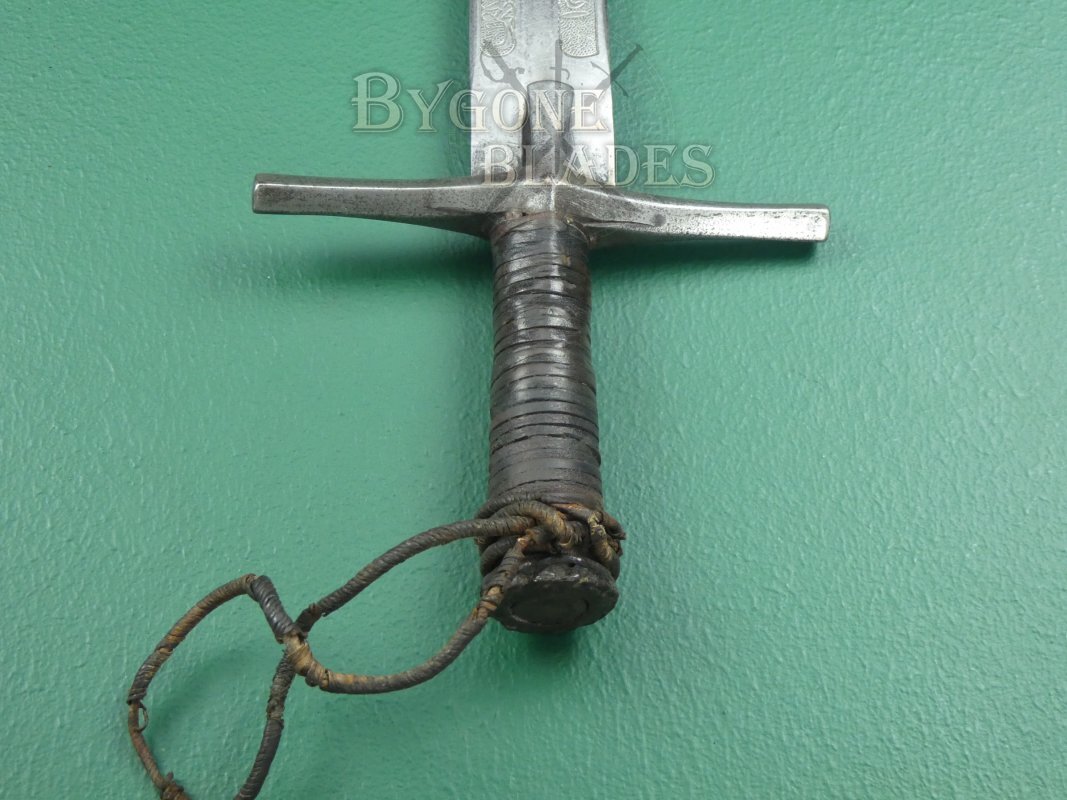
The iron crosspiece has a diamond cross-section and incorporates two languets. The blade is fixed firmly within the hilt and the leather wrapped wooden grip is in great condition. The grip terminates in a leather disk pommel. The original leather lanyard is still attached to the grip.
This is a very fine and early example of the famous Mahdist broadsword.